About Habronattus mexicanus (G.W.Peckham & E.G.Peckham, 1896)
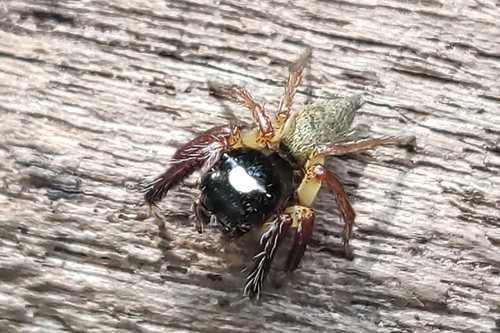
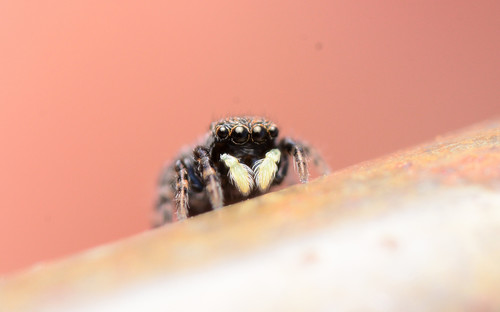
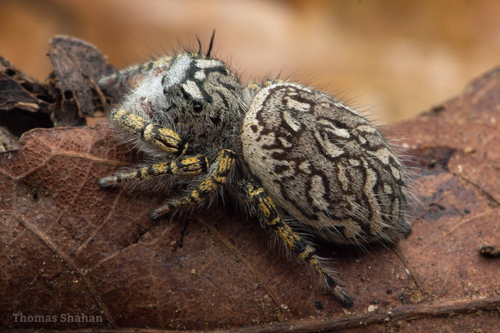
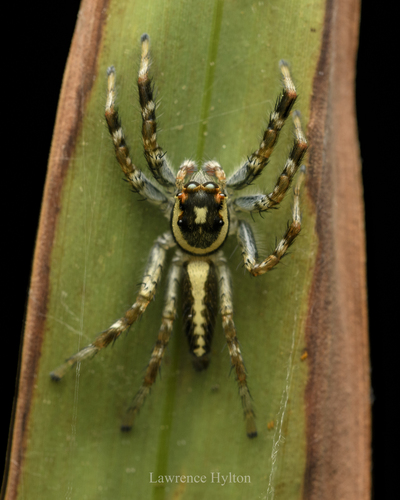
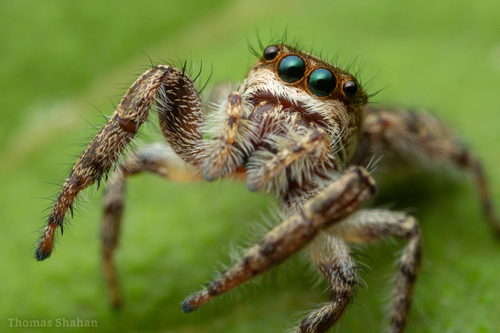
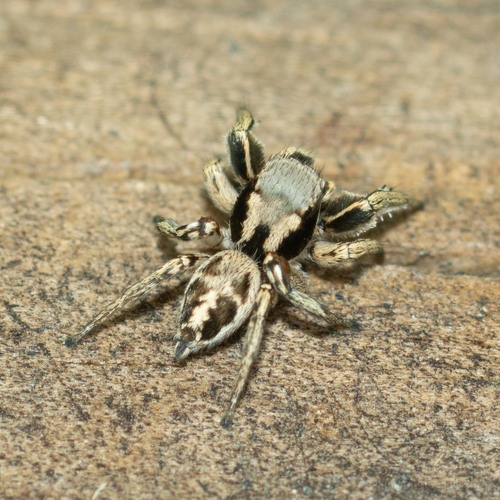
Habronattus mexicanus is a small brown jumping spider. Males and females are generally similar in both size and appearance. This species can be distinguished by the iridescent scales on its clypeus, and the more evenly distributed scales covering its chelicerae. In males, the palpal bulb located at the end of the pedipalp has an embolus that protrudes at an angle of 200 degrees. As part of courtship, these spiders produce complex vibratory song patterns, which represent one of the most complicated sexual displays observed among all animals. This species was first described from specimens collected in areas around Refugio and Reynosa in Mexico. At the time of its original description, it was thought to occur only within Mexico. Similar spiders found in Guatemala were named Habrocestum belligerum, while similar specimens from Honduras were classified as Habrocestum latens. Though these were originally recognized as three separate species, they were merged into a single species, Habronattus mexicanus, in 1987, which greatly expanded the known range of the species. Habronattus mexicanus is now known to occur across other parts of North America, Central America, and the Caribbean, including Cuba and Texas in the United States, as well as across multiple Mexican states from Chiapas to Yucatan.