About Haberlea rhodopensis Friv.
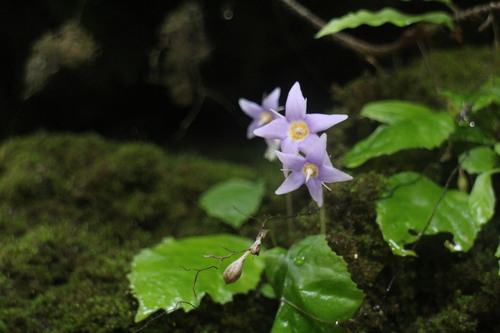
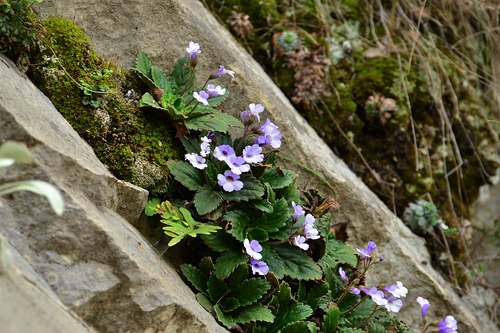
Haberlea rhodopensis Friv., commonly called the resurrection flower and known as Silivryak in Bulgarian, is an evergreen perennial plant. It forms basal rosettes of dark green, serrated, slightly curly leaves, and produces trumpet-shaped flowers in a range of shades from pale pink to dark purple during spring and summer. Its flowers are sensitive to light: they stay closed in shade and open immediately in sunlight. This species grows in damp, shady, north-facing locations, most often on limestone or volcanic rock, and has a very weak root system. When botanical gardens worldwide request Haberlea rhodopensis from Bulgarian botanists, they receive dried whole plants instead of the typical seed shipments. Research has confirmed that during desiccation, the plant retains some of its water content, and its metabolism continues to function at a very slow rate. Beyond its well-known resurrection ability, Haberlea rhodopensis is studied as a potential source of bioactive compounds for use in pharmacology, veterinary medicine, and cosmetics. Phytochemical studies have detected flavonoids, tannins, polysaccharides, lipids, saccharides, carbohydrates, phytosterols, glycosides, saponins, slimes, five free phenolic acids, carotenoids, hesperidin, mustard, and ferulic acids in the plant. The pale lilac-flowered form of Haberlea rhodopensis has earned the Royal Horticultural Society's Award of Garden Merit. Haberlea rhodopensis is an ingredient in the Tibetan tea of youth. Due to the herb's exceptional strength, this tea can be consumed only once every five years. In the Rhodope mountains, one local name for the plant is "shap", the term for foot and mouth disease; this name is taken as confirmation that local people historically used the plant to treat animal diseases. Scientists from the University of Plovdiv and the Medical University Plovdiv in Bulgaria are currently conducting in-depth research on this species. Initial results indicate it supports the natural healing of damaged tissues. In 2014, the plant was investigated as a potential source of new cancer-modulating drugs. It has also been found to have an antibacterial effect against certain pathogenic bacterial strains.