About Gypsonoma aceriana (Duponchel, 1842)
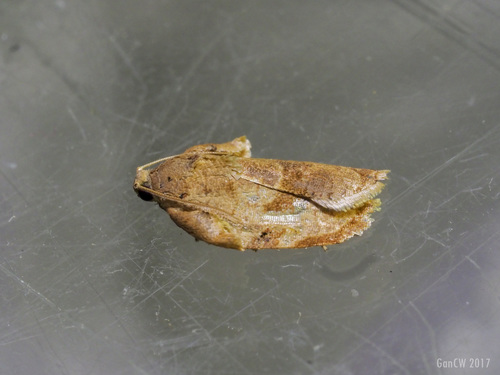
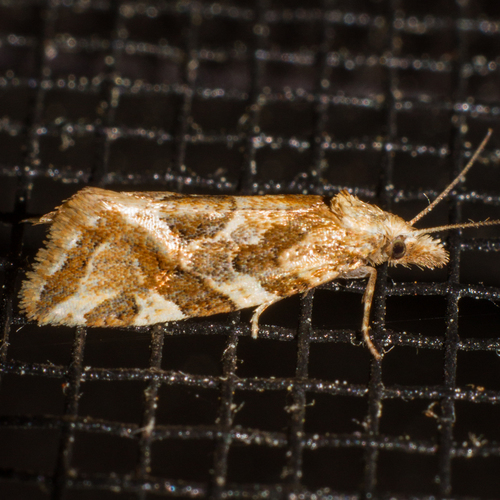
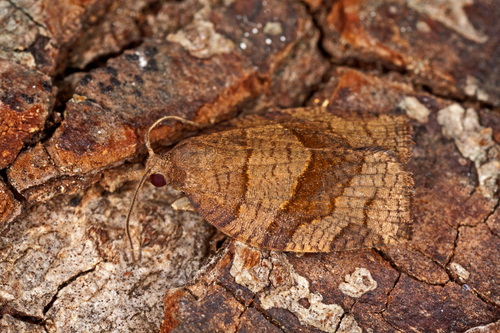
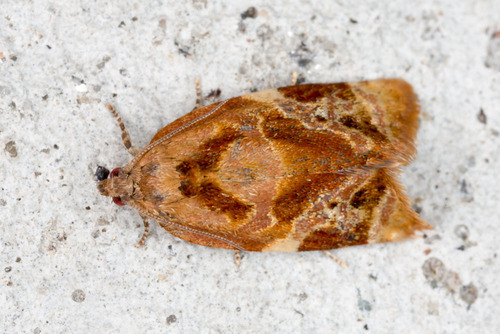
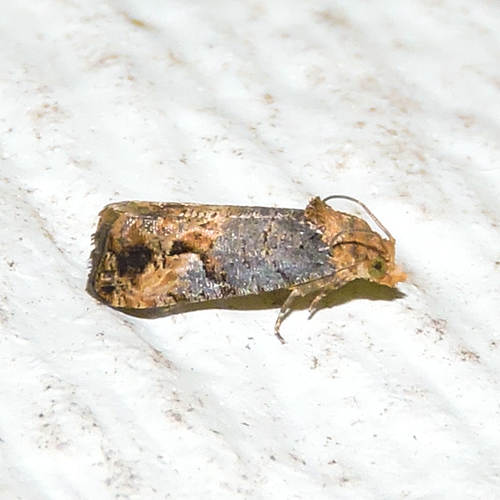
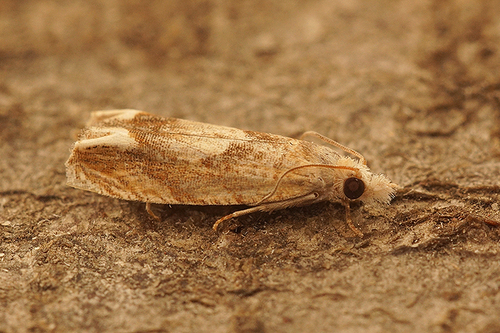
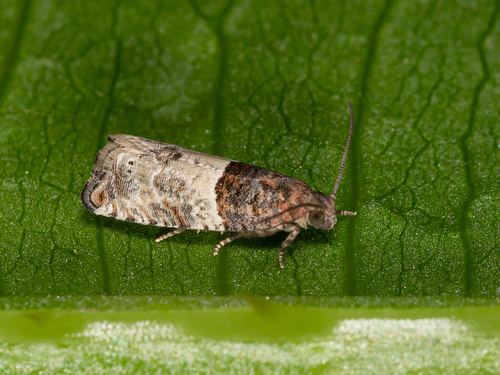
Gypsonoma aceriana, commonly known as the poplar shoot-borer, is a moth species belonging to the family Tortricidae. This species is distributed from Europe to Russia, eastern Turkey, and Iraq, and is also found in North Africa. Adult moths have a wingspan of 13–15 mm. Their face is coloured whitish-fuscous. The forewings are ochreous-whitish, and are more or less sprinkled with fine dark particles, with posterior portions suffused with pale brownish. The costa is obscurely streaked with short dark lines, or strigulated, with blackish. The basal patch is fuscous, marked with blackish, and its edge is obtusely angled or hardly angled at all. The central fascia is fuscous and ill-defined, it is more or less interrupted near the dorsum and bears a small blackish mark in the disc. There are small dots around the ocellus, an irregular spot that touches the middle of the termen, and a small blackish apical spot. The hindwings are grey. Fully grown larvae are dull brownish, with a reddish-brown head and a black plate on the second body segment. Adults are on wing in July. In Japan, this species has two to three generations per year, which occur in June, July, and August. The larvae feed on Populus nigra, Populus nigra subsp. italica, Populus alba, Populus balsamifera, Acer platanoides, and Acer campestre. Gypsonoma aceriana is a common species in poplar plantations and nurseries. It has been recorded as a pest in Italy, France, Germany, and the Netherlands. Older third-instar larvae bore into buds and below terminal shoots, which are usually destroyed. This damage causes bushy growth of lateral shoots and makes young trees unmarketable.