About Gynerium sagittatum (Aubl.) P.Beauv.
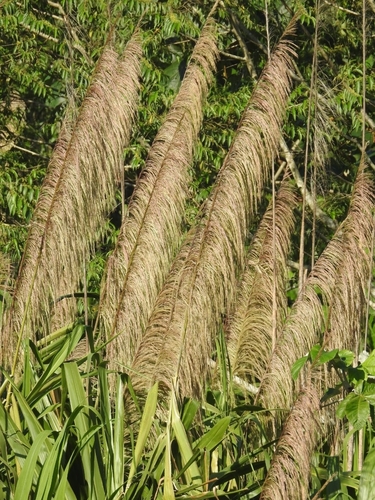
Gynerium sagittatum (Aubl.) P.Beauv. has straight, erect stems. The lower section of the stem is covered in leaf sheaths (called "vainas") left by fallen leaves, while the middle stem has leaves arranged in fan-shaped clusters. The upper stem is round, thin, stiff on the outside and soft on the inside, and grows a large bloom at its apex. The stems of this species vary widely between varieties. The bark zone, which is the primary reason the plant can reach an unusual height, acts as a water distribution system. It carries water from underground roots to the upper parts of the plant, including the leaves, and this essential function takes place in every season of the year. G. sagittatum is an important pioneer species, and is one of the first plants to colonize open, new areas. Its seeds are spread by wind to reach new sites, and once established, the plant spreads through vegetative growth. It typically grows near rivers, lakes, and even on beaches. In Colombia, the straw of Gynerium sagittatum is used to craft a range of accessories, including the traditional sombrero vueltiao, a national symbol of Colombia. In Brazil, the lower and middle parts of the stem are used to make cheap or improvised fences, as well as low-cost trellises for climbing plants and tomato cultivation. The upper stem section with the top bloom is sometimes used for decoration. The more uniform section of the upper stem is used to make arrows and bird cages.