About Gymnoscelis rufifasciata (Haworth, 1809)
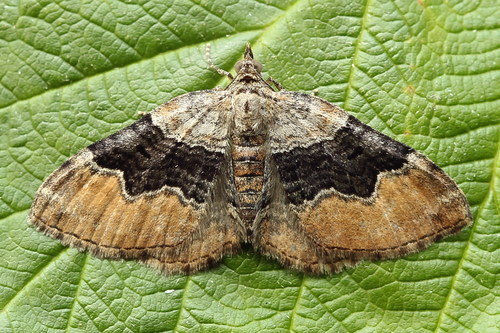
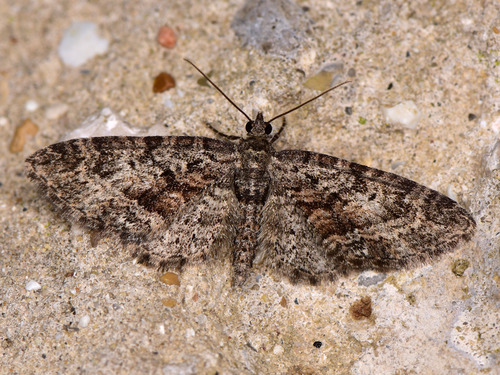
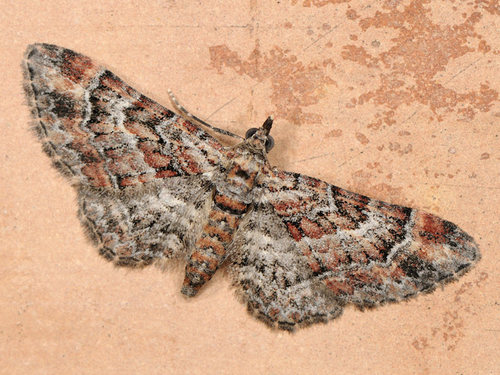
The double-striped pug, scientifically named Gymnoscelis rufifasciata, is a moth species belonging to the family Geometridae. It is a widespread and common species found across the entire Palearctic region, including the Near East and North Africa. This species shows variation in appearance, but is always easy to recognize by the two prominent dark bands (fascia) that cross each forewing – these bands are the source of its common name. The ground colour of the forewing varies between light and dark reddish brown, and its crosslines are clearly distinct. The inner edge of the pale white sub-marginal line has black markings. The hindwings are pale grey, with darker fringes, darker lines, and a small black discal spot. A dark band crosses the basal segments of the abdomen. Adult individuals have a wingspan of 15 to 19 millimeters. Mature caterpillars grow up to 17 millimeters in length, and have highly variable base colouration, ranging from whitish to yellowish green, brown, red, and purple. A pale band runs along the back, marked with a series of dark diamond or triangle-shaped markings. this pattern looks like a backward-facing trident, sometimes takes a crow-foot shape, and can occasionally be only weakly developed. The caterpillar's head is yellowish brown. This species produces two, or sometimes three, generations each year. Adults are active on the wing in April and May, sometimes earlier, then again in July and August, and may also be active later in autumn. Individuals from later generations have heavier dark marking. The moth flies at night, and is attracted to both light and flowers, including flowers of its food plants and other plant species. The larvae feed on the flowers of a very wide range of plants, and have also been recorded feeding on the larvae of other lepidoptera. This species overwinters in the pupal stage.