About Gymnocladus dioicus (L.) K.Koch
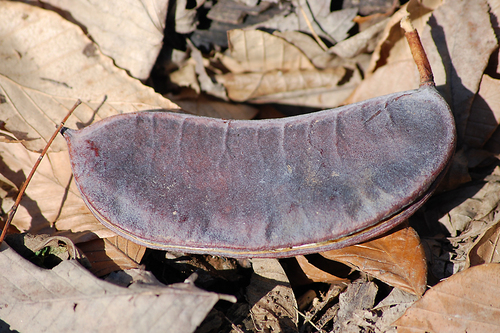
Gymnocladus dioicus, commonly known as Kentucky coffeetree, is a medium-growing tree that reaches 18 to 21 meters (59 to 69 ft) tall, with a 12 to 15 meter (39 to 49 ft) spread and a trunk up to 1 meter (3.3 feet) in diameter. Annual height growth ranges from 12 to 24 inches, and a 10-year-old sapling is typically around 4 meters (13 feet) tall. Usually, the trunk splits into three or four main branches 3 to 4.5 meters (9.8 to 14.8 feet) above ground, forming a narrow pyramidal crown; when crowded by other trees, it grows a single tall, branchless central trunk up to 15–21 m (49–69 ft) tall. Its branches are stout, pithy, and blunt, and it has fibrous roots. Kentucky coffeetree is moderately fast-growing, male trees are commonly planted ornamentally in parks and along city streets, and healthy trees typically live 100 to 150 years, making it a fairly short-lived species. It sheds its leaves early in fall and remains bare for up to 6 months; this naked appearance inspired its Greek genus name, which means "naked branch". Like sumac, it lacks fine small twigs, with smaller branches being thick and lumpy. This stubby growth habit led French settlers in Canada to name it Chicot, meaning "stubby". Expanding leaves are noticeable due to varied leaflet colors: the youngest leaflets are bright pink, while older leaflets range from green to bronze. The bark is ash-gray, scaly, and flakes similarly to black cherry bark, but flakes more extensively; it may also be tan or dark gray, deeply fissured, scaly, and often marked with prominent narrow ridges. New branchlets are initially covered in short reddish fuzz. Kentucky coffeetree is dioecious, meaning male and female flowers grow on separate individual trees. Its fruit is a hard-shelled bean held in heavy, woody, thick-walled pods filled with sweet, thick, gooey pulp. Pods measure 5 to 10 inches (130 to 250 mm) long; unfertilized female trees may produce small, seedless miniature pods. The beans are widely thought to contain the toxin cytisine, though this has not been confirmed by research. The tree's wood is light brown, heavy, strong, coarse-grained, durable when in contact with soil, and able to take a fine polish. It has a specific gravity of 0.6934, and a cubic foot of the wood weighs 43.21 lb (19.60 kg). Winter buds are extremely small, set in downy cavities in the stem, with two buds per leaf axil, the smaller of which is sterile. There are two ovate bud scales covered in brown fuzz that grow with the new shoot; they turn orange-green, become hairy and reach about one inch long before falling off. Leaves are alternate, bipinnately compound, with 10 to 14 pinnate sections. The lowest pinnae are reduced to leaflets, while the remaining sections hold 7 to 13 leaflets. Full grown leaves are 1 to 3 feet long and 18 to 24 inches broad, due to greater development of the upper pairs of pinnae. Leaf stalks and pinnae stalks are round in cross-section, enlarged at the base, smooth when mature, pale green, and often purple on the upper side. Leaflets are ovate, 2 to 2.5 inches long, with a wedge-shaped or irregularly rounded base, wavy margin, and pointed apex. They emerge bright pink from buds, soon turning bronze green, smooth, and shiny on the upper surface. When fully mature, they are dark yellow green above and pale green beneath, turning bright clear yellow in autumn. Stipules are leaf-like, lanceolate, serrate, and deciduous. Winter twigs are very stout, colored dark reddish brown to green brown, with very thick pith that ranges from salmon pink to brown. There is no terminal bud; lateral buds are small, bronze, and partially sunken beneath the twig's bark. Leaf scars are very large, heart-shaped, and marked with 3 to 5 conspicuous bundle scars. Male flowers grow in short raceme-like corymbs 3 to 4 inches (75–100 mm) long, while female flowers grow in racemes 10 to 12 inches (250–300 mm) long, so female flowers are about twice the size of male flowers. Flowers open in June, they are terminal, greenish white, and dioecious by abortion. The calyx is tubular, hairy, ten-ribbed, and has five acute, nearly equal valvate lobes in bud. The corolla holds five oblong, hairy petals that are spreading or reflexed, and imbricate in bud. There are ten stamens: five long and five short, free and included inside the flower, with thread-like filaments and orange introrse anthers; stamens are small and sterile in female flowers. The pistil has a superior, sessile, hairy ovary that narrows to a short style with two stigmatic lobes, and ovules arranged in two rows. The fruit is a legume 6 to 10 inches (150–250 mm) long and 1.5 to 2 inches wide, somewhat curved, with thickened margins, dark reddish brown with a faint glaucous bloom, and capped with the remains of the style. Fruit stalks are 1 to 2 inches long. Each pod holds 6 to 9 seeds surrounded by a thick layer of dark, sweet pulp. Kentucky coffeetree has a carrot-like proportional taproot; seedlings grow far more root length than above-ground height. The taproot makes the tree difficult to transplant, so it is not commonly offered in standard nursery trade. As a member of the legume family, its roots fix nitrogen in soil. It prefers rich, moist soils in floodplains, terraces, ravines, coves, and lower slopes. Kentucky coffeetree is classified as a rare tree species, defined as so uncommon that populations require monitoring to check if they become threatened. It is widely distributed across its range but rare overall. Its native range is limited: it occurs in Southern Ontario, Canada, and in the United States extends from Kentucky (where Europeans first encountered the species) and Connecticut in the east, west to Kansas, eastern Nebraska, and southeastern South Dakota, north to southern Wisconsin and Michigan, and south to northern Louisiana. It has a disjunct population in Central New York. It is planted as an urban shade tree across the United States and eastern Canada, including California. It usually occurs as widely scattered individuals or small colonial groups with interconnected root systems. It grows in floodplains and river valleys, and is sometimes also found on rocky hillsides and limestone woods. In the northeastern part of its range, apparently natural groves of the tree are associated with known prehistoric village sites. In some parts of its range, the tree can act as an indicator of limestone or calcareous soils. Kentucky coffeetree is considered an example of an evolutionary anachronism. Its tough, leathery seed pods are too hard for most living animals to chew through (they are also reputed to be poisonous), and are too heavy for dispersal by either wind or water. It has been hypothesized that the tree was once browsed by now-extinct mammalian megafauna, which ate the pods, nicked the seeds with their large teeth, and aided germination; this behavior is observed in African elephants feeding on related Fabaceae species in Africa. As a result, the tree's prehistoric range may have been much larger than its historical range. In modern times, wild Kentucky coffeetree only grows well in wetlands, and it is thought that only these wet conditions allow seed pods to rot enough to permit germination in the absence of large herbivores. Caution is recommended for consumption: unroasted or partially roasted beans and pods are considered poisonous and are reputed to contain the alkaloid cytisine. Pods can be preserved like tamarind pods, are edible, and have a mild laxative effect. Many sources claim that roasting seeds for a set length of time reduces or eliminates the putative cytisine, but this claim is not supported by scientific evidence. There are many anecdotal reports of people drinking a coffee-like beverage made from the seeds without experiencing adverse health effects, though most find the taste unpleasant. The plant is toxic to some animals and may intoxicate dogs. Gymnocladus dioicus is well-suited to urban environments: it tolerates poor soils, has extreme drought tolerance, and is not susceptible to serious insect infestations or disease. It is cultivated by specialty tree nurseries as an ornamental tree for planting in gardens and parks. Its characteristic late leaf emergence and early leaf drop, combined with large leaves that leave few twigs visible in winter, make it ideal for urban shading where maximum winter sunlight is desired, such as near solar hot-air systems. It is often planted for its unique appearance and interesting character, and several Kentucky coffeetrees grow at Mount Vernon, in the gardens along the path to George Washington's house. It prefers rich moist soil such as bottom lands, and its growth is largely unaffected by heat, cold, drought, insects, disease, road salt, ice, and alkaline soil. Kentucky coffeetree is easy to grow from seed: hand-filing the seed coat with a small file then soaking the seeds in water for 24 hours ensures rapid germination. Propagation is also easy from dormant root cuttings taken between December and March. In its native habitat, it typically grows on alluvial soils of river flood plains and nearby terraces, where it may be locally abundant and form large clonal colonies, reproducing by shoots sprouting from roots. Roasted beans were eaten by the Meskwaki (Fox), Ho-Chunk (Winnebago) and Pawnee Native American peoples. The Meskwaki also drank a hot coffee-like beverage made from roasted ground seeds. The common name "coffeetree" comes from this use, which European settlers adopted as a coffee substitute, especially during periods of poverty, similar to chicory. Settlers considered it inferior to true coffee: when Kentucky was first settled by pioneers from Atlantic states who had few necessities beyond what they could grow from the land, they believed they had found a coffee substitute in the tree's seeds and gave it the name coffeetree. Once trade connections to seaports were established, they gladly abandoned this local beverage for the more pleasant flavor of coffee, and the tree is no longer used for this purpose today. Roasted seeds can also be eaten like sweet chestnuts, and fruits can be collected from the tree or ground at any time during fall, winter, and spring.