About Gymnocalycium mihanovichii (Fric & Gürke) Britton & Rose
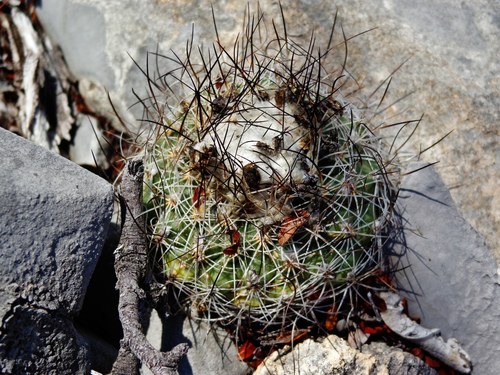
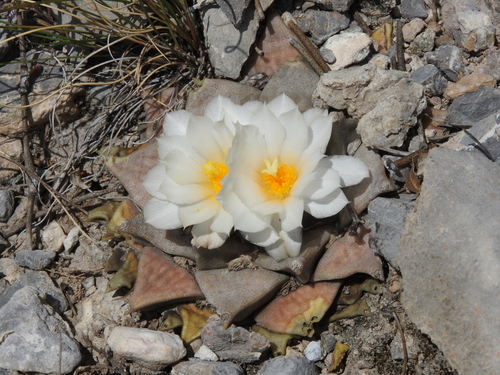
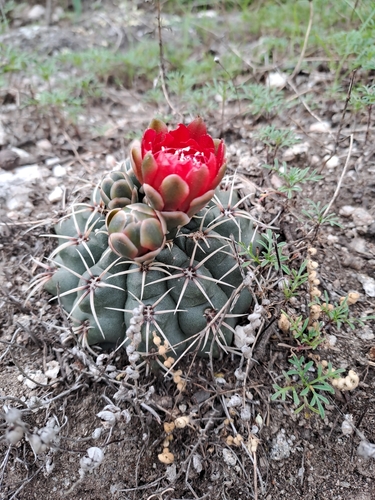
Individual plants of Gymnocalycium mihanovichii grow alone and have a broad-spherical plant body that is gray-green, often overlaid with reddish color. Mature plants reach 3 to 5 centimeters in both height and diameter. This species typically has 8 narrow-edged, slightly notched ribs. It bears 5 to 6 weak, pliable, slightly curved thorns that are grayish-yellow, 0.8 to 1 centimeter long, and may partially fall off. Its flowers are 4 to 5 centimeters long, bell-shaped to funnel-shaped, and range in color from yellowish-olive to light olive green. The light green stamens are arranged in two rows. Both the style and stigma are light green and yellowish, respectively. Fruits are spindle-shaped. Cultivars in the "Hibotan" group have non-natural body colors because they lack chlorophyll. These cultivars cannot survive on their own roots, so they must be grafted onto another cactus species, most commonly Hylocereus. In the wild, different Gymnocalycium species have different light preferences: some grow shaded under shrubs or grasses, while others prefer full sunlight. As a cultivated plant, the moon cactus (Gymnocalycium mihanovichii) grows best in bright indirect light and can be grown indoors year-round. Wild Gymnocalyciums that prefer abundant sunlight require protection from the sun during the hottest months; excessive shading will prevent the plants from flowering. Potted plants need potting medium with good drainage, so the soil does not stay waterlogged for more than one or two days after watering. In summer, the plants need frequent watering—those in small pots typically need watering every week. Regardless of pot size, the growing medium must be almost completely dry before you water again. No watering is needed during the winter months.