About Grammostola rosea (Walckenaer, 1837)
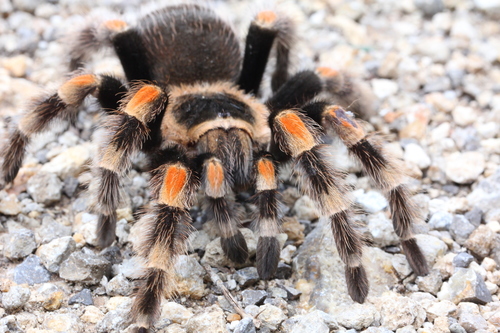
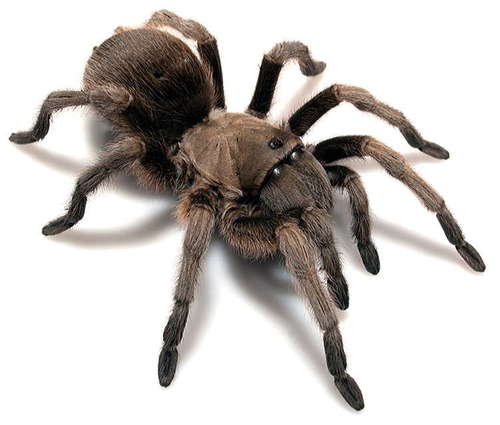
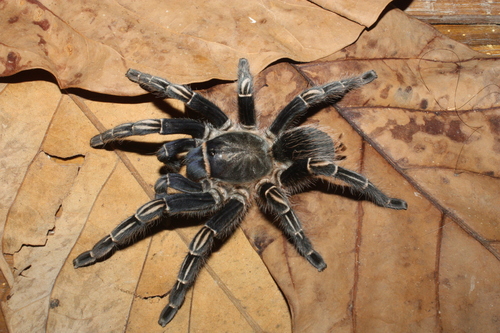
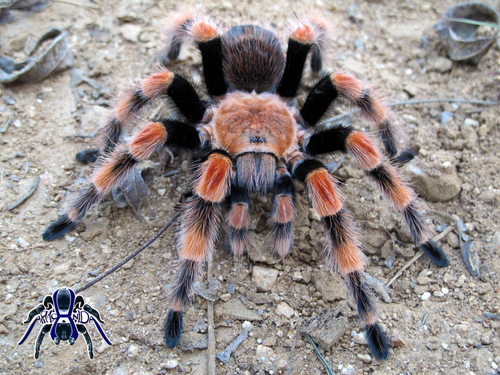
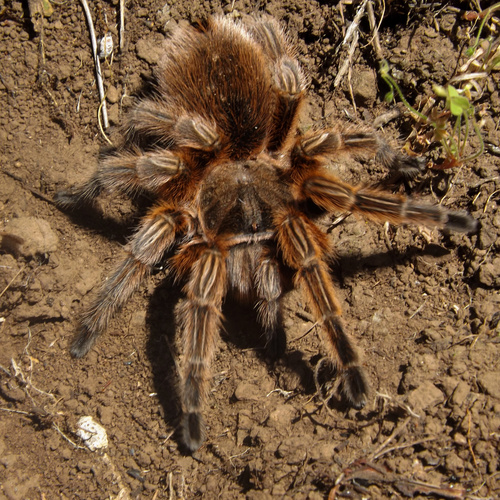
The Chilean rose tarantula, with the scientific name Grammostola rosea (Walckenaer, 1837), is also called the rose hair tarantula, Chilean fire tarantula, or Chilean red-haired tarantula, with the different common names referring to its different color morphs. This species is likely the most common tarantula available in American and European pet stores today. This is because large numbers of wild-caught specimens are cheaply exported from its native Chile for the pet trade. The species is also found naturally in Bolivia and Argentina, and it is a very common pet among tarantula hobbyists. Female Chilean rose tarantulas have been recorded living up to 20 years. Because the species has only been available on the market (and available for extensive study) for a limited time, it is possible that they can live considerably longer than 20 years. In the past, there was significant confusion between G. rosea and the species Grammostola porteri. However, in 2022, the World Spider Catalog revised Grammostola porteri to be a junior synonym of Grammostola rosea. The natural habitat of G. rosea is the high desert and scrub regions of northern Chile, Bolivia, and Argentina. These spiders live at lower altitudes, ranging from 0 to 1,500 meters (0 to 4,921 ft) above sea level. Human activity, industrialization, and urbanization have often disturbed the Chilean rose tarantula’s natural habitats, which makes it harder to pinpoint the species’ exact distribution. While habitat loss is a threat to this species, it is not endangered, and it has no official wildlife conservation status. Chilean rose tarantulas usually either dig small burrows or occupy abandoned burrows left by reptiles or rodents, which they then line with their silk. Their burrows are typically straight down, with only one or two chambers. Males generally build their burrows underneath more vegetation and plant cover, or under stones. Female burrows are less sheltered but are deeper, reaching 40 cm down. Only one spider occupies each burrow, as this species lives alone for most of its life. In areas with high population densities, burrows are no closer than 1 meter (3 ft 3 in) apart. Females only leave their burrows for short distances to trap food or search for potential mates. Males abandon their burrows entirely to search for mates, typically between September and March. G. rosea has two distinct mating seasons: one from September through March, and another from May through July. To reach sexual maturity, these spiders must molt several times over a period of three to four years. As they molt, males develop a hook on their first pair of legs, called tibial hooks, which are used to hold and restrain the female during mating. Once a male reaches sexual maturity, he builds a sperm web, deposits his sperm onto it, then transfers the sperm back into his pedipalps before approaching a female. He approaches the female’s burrow cautiously, tapping and vibrating his legs to draw her out of her shelter. At the right moment, the male lunges forward, uses his hooks to hold the female’s chelicerae, and pushes his mate into a vertical position, which gives him access to the female’s epigyne, her external genitalia. The male inserts one or both of his pedipalps into the female’s epigyne and injects fertilizing fluid. In the weeks after fertilization, if the female does not molt, she will spin a web and lay between 50 and 200 eggs. Males die a few months after reproducing.