About Glycyrrhiza lepidota Pursh
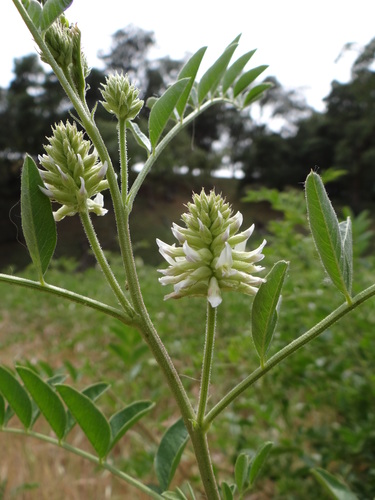
Glycyrrhiza lepidota, commonly called American licorice, is a species in the genus Glycyrrhiza, which belongs to the pea/bean plant family Fabaceae. It is native to most of North America, ranging from central Canada south through the United States to California, Texas, and Virginia, but is not found in the southeastern states. In the United States, it is also sometimes referred to as wild licorice, to set it apart from the related cultivated species European licorice (Glycyrrhiza glabra). This plant grows in moist soils. While it can survive in heavy soil, it prefers sandy soil. It reaches a height of 40–100 cm (16–39 inches), and has long, tough brown roots that are reported to be sweet. Native Americans used these roots as food and for medicinal purposes. After eating a roasted root of this species in 1806, Meriwether Lewis described it as having an agreeable flavor not unlike sweet potato. The sweet taste of American licorice comes from glycyrrhizin, not from sugar. Glycyrrhizin can raise blood pressure (hypertension) by interfering with cortisol conversion. The Zuni people chew the root to keep the mouth sweet and moist. Cattle graze on American licorice, but it is not a preferred feed source, and its population will increase under grazing as competing plants are eaten by grazing animals. New growth of this plant can be toxic. In spring, it produces light green to white flowers. These ripen in fall to form clusters of burs, which hold pods containing small, bean-shaped seeds. It can act as a pioneer species to revegetate bare or disturbed ground, and it is often the first species to colonize a receding alkali flat. There is an existing market for American licorice root for both medicinal uses and flavoring, including as a sweetener for tobacco products.