About Glyceria fluitans (L.) R.Br.
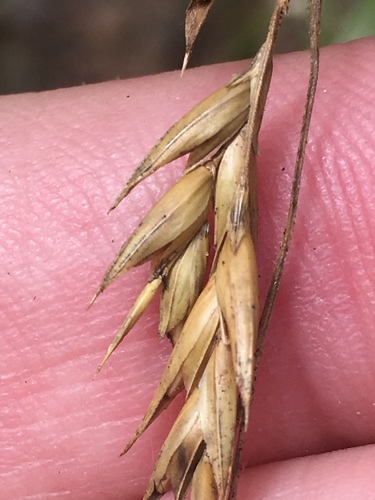
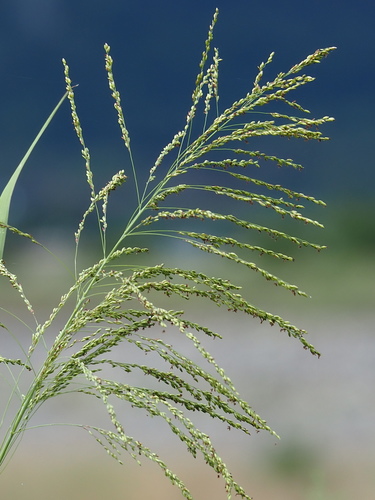
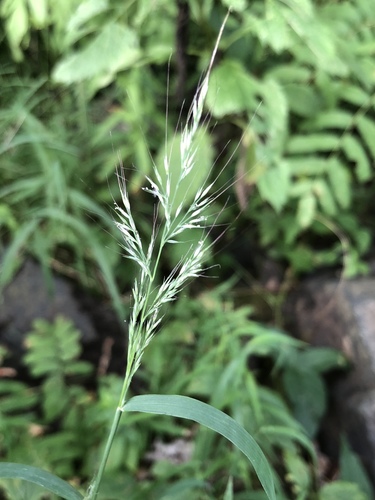
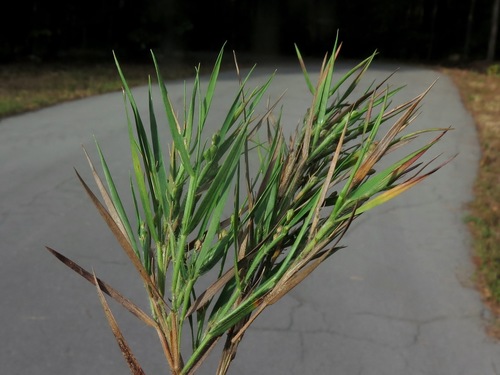
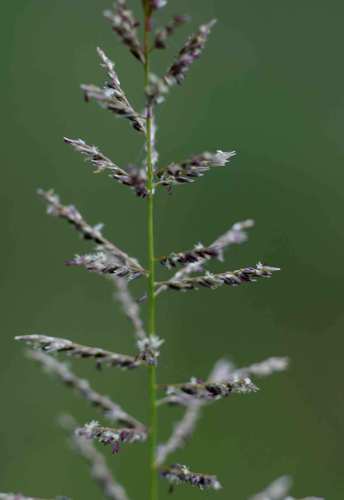
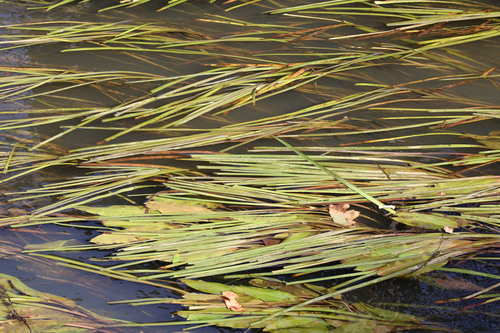
Glyceria fluitans (L.) R.Br. has several synonyms: Festuca fluitans, Poa fluitans, and Panicularia fluitans. It is commonly called floating sweet-grass and water mannagrass, and is a perennial grass species in the genus Glyceria. It is native to Europe, the Mediterranean region, and Western Asia, and grows in wet habitats including ditches, riverbanks, and ponds. This grass has a creeping rootstock and a thick stem that can grow up to one metre tall. Its leaves are long, narrow, and pale green, rough on both sides, and often folded at the keel, which rests on the water surface. The species epithet fluitans is Latin for "floating". Grains of Glyceria fluitans have been used as food in Poland, Germany, Hungary, and other European countries, where they were popular for their sweet taste and high nutrient content. In Poland, dishes made with Glyceria fluitans are considered local cuisine specialities. Historically, Glyceria fluitans was used to make sweet cakes, flatbreads, and dumplings; it was served with butter or boiled milk, added to broths and soups seasoned with oriental spices, and used as a binding additive in sausages. Between the 17th and 18th centuries, pharmacopoeias recommended consuming this plant for its health benefits for people recovering from debilitating diseases and malnourished young people.