About Glochidion ferdinandi (Müll.Arg.) F.M.Bailey
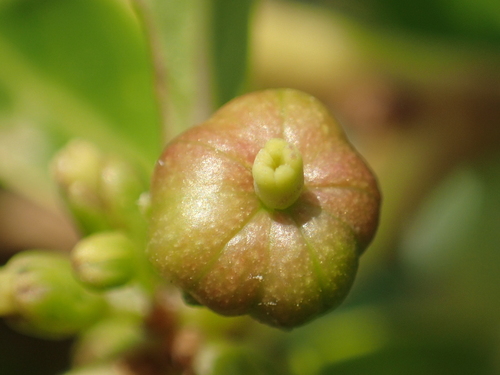
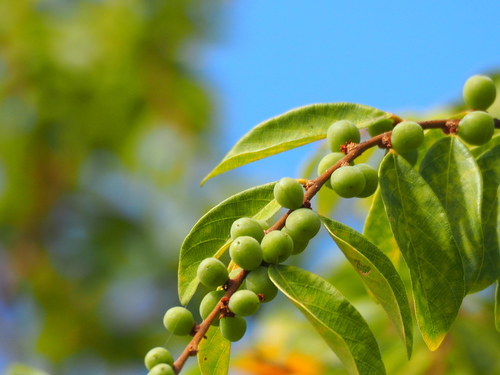
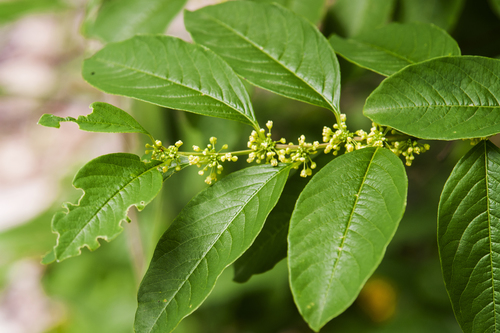
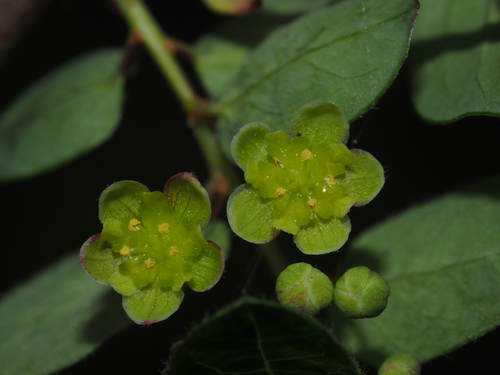
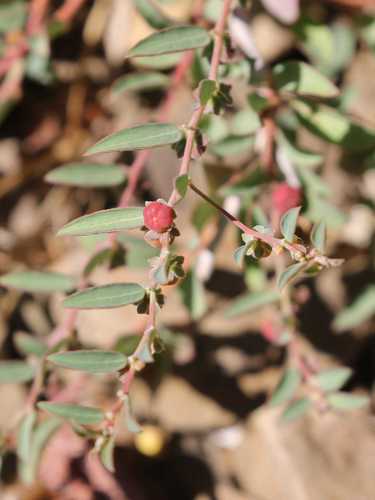
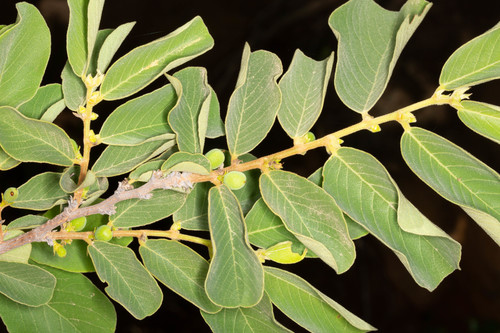
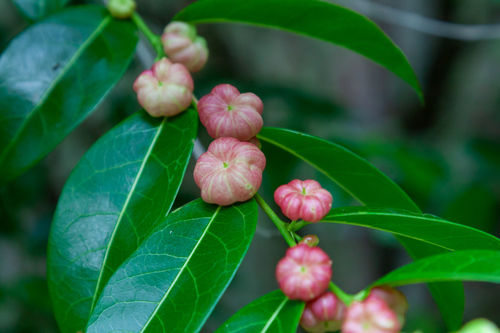
Glochidion ferdinandi (Müll.Arg.) F.M.Bailey, commonly called the cheese tree, grows as a woody shrub or small tree reaching 8 metres (26 ft) in height, though it may occasionally grow up to 30 metres (98 ft). It has flaky brownish-grey bark. Its leaves are simple, arranged alternately along stems, elliptical in shape, and measure 3–10 centimetres (1.2–3.9 in) long by 1.5–4 centimetres (0.59–1.57 in) wide. This species may be partly deciduous during winter. It can flower at any time of year, and produces separate single female and male flowers that grow in groups of three. Flowers of both sexes are green-yellow; male flowers have a diameter of around 0.7 cm, while female flowers measure 0.5 cm across. Its most distinctive feature is its small, pumpkin-shaped fruit. Fruit start green, then change to shades of white and pink as they mature. They are radially divided into segments, and split open to reveal bright red 0.5 cm seeds between November and April. In terms of distribution and habitat, the cheese tree grows in both clay and sandy soils. It occurs in rainforest and wetter areas of sclerophyll forest, where it is often associated with species such as bangalay (Eucalyptus botryoides), woollybutt (E. longifolia), forest red gum (E. tereticornis), thin-leaved stringybark (E. eugenioides) and swamp she-oak (Casuarina glauca). The hairy variety of cheese tree grows alongside magenta lilly pilly (Syzygium paniculatum), broad-leaved paperbark (Melaleuca quinquenervia), and Rhodomyrtus species. The species ranges from central Queensland south to the area around Ulladulla (35° S) in southern New South Wales. In ecological interactions, the fruit of Glochidion ferdinandi is eaten by several bird species, including the Australasian figbird (Sphecotheres vieilloti), Lewin's honeyeater (Meliphaga lewinii), olive-backed oriole (Oriolus sagittatus), white-headed pigeon (Columba leucomela), topknot pigeon (Lopholaimus antarcticus), brown cuckoo-dove (Macropygia phasianella), and Australian king parrot (Alisterus scapularis). The pied currawong (Strepera graculina) also eats the fruit but regurgitates it, while new leaf growth is eaten by the rainbow lorikeet (Trichoglossus haematodus). This species also acts as a food source for the larvae of the shining pencil-blue (Candalides helenita), and the shining- or common oak-blue (Arhopala micale). The ladybird Scymnodes lividigaster feeds on the aphid Aphis eugeniae, which in turn feeds on the cheese tree. Like other species in the genus Glochidion, Glochidion ferdinandi is thought to depend on leafflower moths (Epicephala spp.) for pollination. Leafflower moths, including the species Epicephala colymbetella, have been collected from the fruit of this species. While leafflower moths actively pollinate Glochidion flowers, adult moths also lay eggs inside the flowers; their caterpillars later consume a portion of the developing seeds in the fruit. G. ferdinandi is unusual (though not unique) among Glochidion species because its fruit contain empty carpel chambers where E. colymbetella caterpillars pupate, and from which adult moths eventually emerge. Glochidion ferdinandi is a long-lived species that may live 60 years or more. It can produce suckers or resprout after bushfires. Its seeds take between 1 and 4 months to germinate. In 2019, two cases of acute liver failure in dogs were published. Both dogs had chewed on roots of this species, but it remains unclear whether the liver failure was caused by the tree roots themselves, a fungus that grows on the tree roots, or another unrelated source. In cultivation, Glochidion ferdinandi is an easy-to-grow pioneer species useful for bush regeneration and natural landscaping in areas where it is native in eastern Australia. The species can colonise disturbed areas, and is fast-growing. Plants need ample water, but adapt to a wide range of soils and can grow in full sun or shade. It can also be grown as an indoor plant in a brightly lit position. Its dried fruit, which resemble miniature pumpkins, are sold as "putka pods" for use in potpourri.