About Glebionis segetum (L.) Fourr.
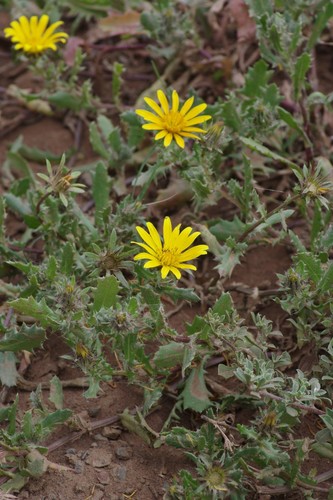
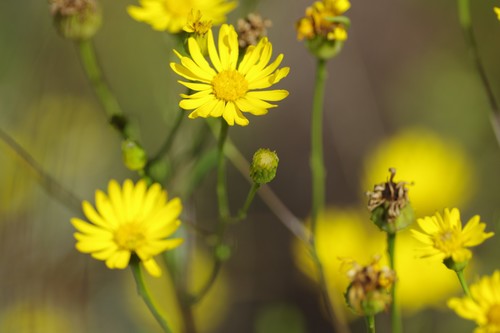
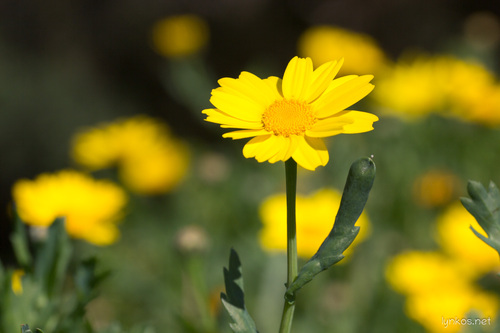
Glebionis segetum, also known by the synonym Chrysanthemum segetum, is a flowering plant species in the Asteraceae family. It is likely originally native only to the eastern Mediterranean region, but is now naturalized across western and northern Europe, China, and parts of North America. Its common names are corn marigold and corn daisy. This species has been hybridized with related Argyranthemum species to develop cultivars of garden marguerites. Glebionis segetum is an herbaceous annual plant that grows up to 80 cm tall. It has spirally arranged, deeply lobed leaves that measure 5–20 cm long. Its flowers are bright yellow, formed in capitula (flowerheads) 3.5-5.5 cm in diameter, with a ring of ray florets surrounding a center of disc florets. Widely naturalized outside its native range, Glebionis segetum colonized western and central Europe alongside early human agriculture, and can act as an invasive weed in some regions. In a UK survey of nectar sugar and pollen production by meadow species, Glebionis segetum ranked very highly for nectar production, making it a particularly valuable nectar source for insects. In this study, Glebionis segetum produced nearly the same amount of nectar and pollen as Centaurea cyanus, the common cornflower, the top nectar sugar producer among cultivated plants included in the survey, as opposed to plants classified as weeds. Its long blooming period contributes to this high ranking. Unlike some other top-ranked plants in nectar sugar production surveys, such as bull thistle Cirsium vulgare, which produce few flowers with high individual nectar volume over a short blooming period that fully exhausts the plant, Glebionis segetum does not follow this growth pattern. The plant strongly attracts very small butterflies, such as the Pearl Crescent, and small hoverflies including Toxomerus marginatus. Japanese beetles feed on its petals. Historical records indicate corn marigold was a serious weed in 13th century Scotland. This is supported by a law from King Alexander II, which stated that a farmer would be fined a sheep if they allowed even a single Glebionis segetum plant to produce seed growing among their crops. In Crete and Greece, local people eat the leaves and tender shoots of a local variety called neromantilida: they are eaten raw in salads, or cooked by browning in hot olive oil.