About Glaucidium brasilianum (J.F.Gmelin, 1788)
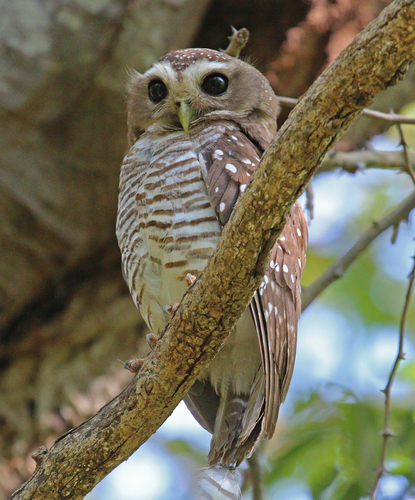
The ferruginous pygmy owl, with the scientific name Glaucidium brasilianum (J.F.Gmelin, 1788), is a small, stocky owl that typically measures 15 cm (5.9 in) long. It has disproportionately large feet and talons. Its crown features elongated white or buff streaks, its wing coverts bear white spots, and its underparts have heavy white streaking. Prominent white supercilia sit above the facial disc, and there are two dark spots on the nape that birders often call "false eyes". This species has highly variable overall coloration. Individuals can range from grey-brown with a black-and-white barred tail to rich rufous with a uniform rufous tail. The sexes have similar appearances, though females are slightly larger and often more reddish. Its flight is typically undulating, similar to the flight of many woodpecker species. Small birds can easily reveal the owl's location when they mob it while it perches in a tree; up to 40 birds from 11 species have been recorded mobbing a single ferruginous pygmy owl. This species is crepuscular, but it often hunts during the day. It preys on a wide variety of animals, including birds, lizards, other reptiles, amphibians, small mammals, and insects. Documented specific prey items include grasshoppers, crickets, cicadas, scorpions, six-lined racerunners, four-lined skinks, Texas spotted whiptails, creamy-bellied thrushes, pale-breasted thrushes, eared doves, and mice.