About Gladiolus imbricatus L.
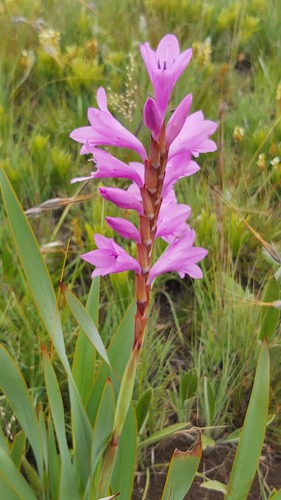
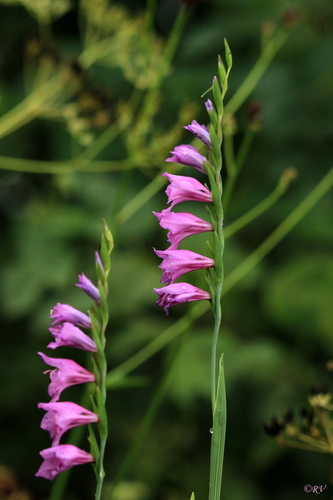
Gladiolus imbricatus L. grows to a height of 30–100 centimetres (12–40 in). It has an erect, glabrous, unbranched stem, and a spherical tuber surrounded by parallel fibers. Its leaves are shorter than the stem, simple, sword-shaped, with parallel venation, and over 10 millimetres wide. It produces a one-sided inflorescence holding 3–12 hermaphroditic flowers. Flowering occurs over a few weeks between June and July, varying by location and weather conditions. This species is pollinated by insects, primarily bees and bumblebees. Its relatively heavy winged capsule fruits weigh approximately 1.7 mg, and ripen 1 to 2 months after flowering, from late July through September. The capsules have good floating ability; laboratory tests show up to 50% still float after 30 days. They are dispersed via hydrochory, or via zoochory, especially on pastures. A single plant can produce 200–400 capsules per growing season. Its seeds require several months of cold exposure to germinate when temperatures rise in spring. Vegetative cloning is an additional form of reproduction, and reported frequency relative to seed propagation varies between sources. Seedling establishment is the most critical life phase for this species. While germination itself does not need light, seedling survival requires a not-too-dense litter layer and open vegetation that lets ample light pass through. The chromosome number of Gladiolus imbricatus is 2n = 60, which matches the chromosome count of Gladiolus palustris. Information is provided for distinguishing between three native Gladiolus species in Germany. This species is distributed across Central and Eastern Europe, Mediterranean countries, the Caucasus, and Western Siberia. It may reach its highest abundance in the coastal meadows of Luitemaa Nature Reserve in southwestern Estonia. Gladiolus imbricatus is a mesophyte that favors habitats with variable moisture levels and lime-free soils ranging from low to moderately high in nutrients. It is common in flood-meadows and coastal meadows. Because it needs light for successful seedling establishment, this meadow species is rarely found in forests, and grows mostly in open grasslands.