About Gladiolus alatus L.
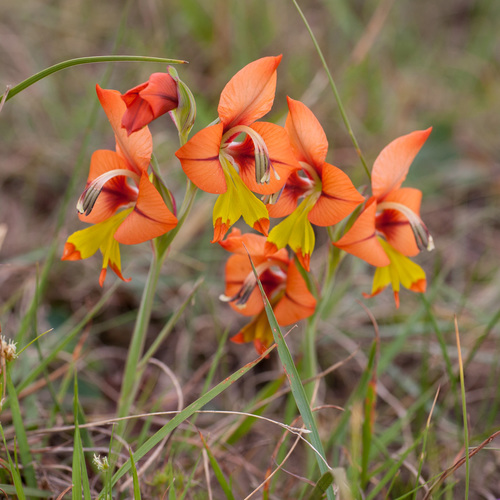
Gladiolus alatus L. is a geophyte species native to South Africa. Its common names are painted ladies, king kalkoentjie, and kipkippie. The Afrikaans word kalkoentjie translates to "little turkey", a reference to the flower's shape which resembles a turkey's wattle. This species is popular as a garden plant, and it is an important component of the cut flower industry in some regions, valued for its large, showy orange flowers. Gladiolus alatus is endemic to South Africa. Its range extends from southern Namaqualand south to the Cape Peninsula, and east to Caledon and Bredasdorp. It grows on slopes with sandstone and granitic soils. Within parts of its range, this plant can sometimes be found growing inside clumps of restios. This growth pattern helps protect the species from grazers and moles. Gladiolus alatus is primarily pollinated by solitary bees, and its light, winged seeds are dispersed by wind. The species holds commercial importance both as a garden ornamental and for the cut flower industry. Several exotic cultivars are grown commercially; some varieties, including Pietmohlen and Florared, have more desirable traits than others. Its pollen can be frozen for long-term storage.