About Geum radiatum Michx.
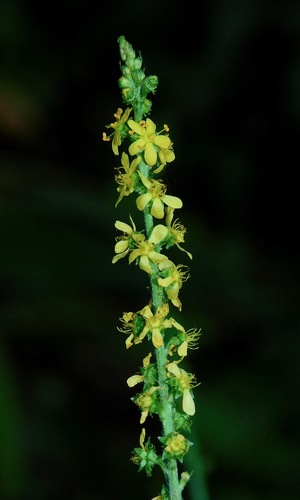
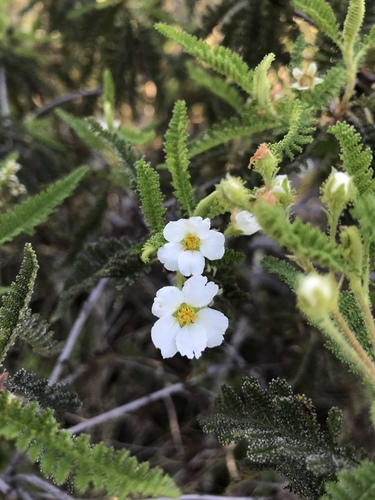
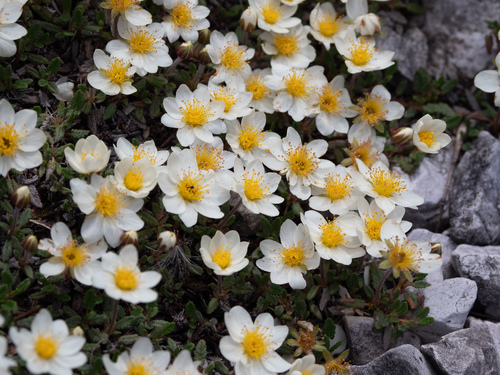
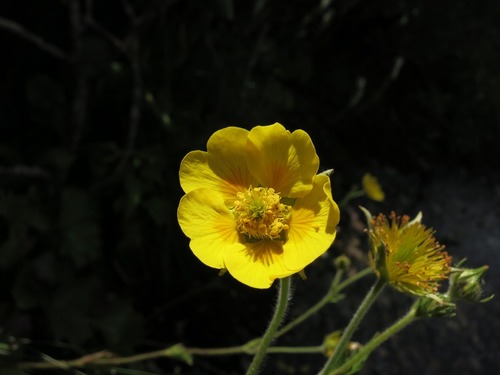
Geum radiatum Michx. is a rare species of flowering plant in the rose family, with common names spreading avens, Appalachian avens, and cliff avens. It is native to the border region between Tennessee and North Carolina in the southeastern United States, where eleven populations are currently known to remain. This species was federally listed as an endangered species in 1990. Geum radiatum is a perennial herb that grows from a horizontal rhizome that spreads beneath the soil. Several rosettes of leaves sprout from the rhizome; what may look like separate individual plants are actually all clones of a single genetic individual, because this species reproduces vegetatively. Its large leaves are distinctly kidney-shaped. Stems grow between 20 centimeters and half a meter, or 8 to 20 inches, tall, and produce bright yellow flowers during the summer months. This species looks very different from other Geum species that grow in the same area. Its closest relative is likely Geum peckii, which does not grow in the same region as Geum radiatum. Geum radiatum grows on a small number of tall mountaintops above 1310 meters (4367 feet) elevation in the southern Appalachians of eastern Tennessee and western North Carolina. It grows from steep, often vertical cliffs, anchored in place by its rhizome. Its habitat is exposed and sunny, with acidic, gravelly soil. Other plant species that occur in its habitat include Solidago spithamaea, Kalmia buxifolia, Menziesia pilosa, Rhododendron catawbiense, Heuchera villosa, Micranthes petiolaris, plus various species of asters, sedges, and grasses. The forests surrounding these cliffs are dominated by red spruce (Picea rubens). In total, fifteen populations of Geum radiatum are currently known to exist. Three additional populations have been extirpated; these occurred in areas that were popular for recreational activities including hiking and mountain climbing. Threats to the remaining populations include erosion, soil compaction from trampling, and development of recreational infrastructure such as trails, ski slopes, parking lots, and bridges. Poaching is also a problem for this species, as it is a mountain wildflower with showy yellow blooms. Pollution, including acid rain, may also pose a threat. Many of the few remaining populations are small, with fewer than 50 individual plants, and the number of genetically distinct individuals may be even smaller. Climate change threatens the long-term viability of this species.