About Getonia floribunda Roxb.
Nomenclature
Getonia floribunda Roxb., commonly called Ukshi, has multiple regional common names: kokkarai in Hindi, Minnarakoti in Tamil, and Adivijama in Telugu.
Growth Form and Size
It is a large climbing shrub that reaches 5–10 m in length, with vines around 5–10 cm in diameter.
Distribution and Habitat
The species grows extensively in low-lying tropical evergreen forests of the Western Ghats of India, occurs rarely in the Eastern Ghats of coastal Andhra Pradesh, is also found in the "Kavus" (Sacred Groves) of Kerala, and is cultivated in central and southern parts of India.
Bark Characteristics
This plant has grey bark, and its surface is covered in thick fluff.
Branch Characteristics
New branches are hairy and rust-colored, while mature branches are thin.
Leaf Characteristics
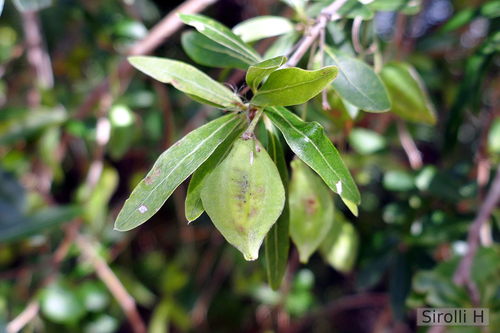
Its leaves are keratinous, ovoid or oval in shape, and measure 5–12 cm long.
Inflorescence
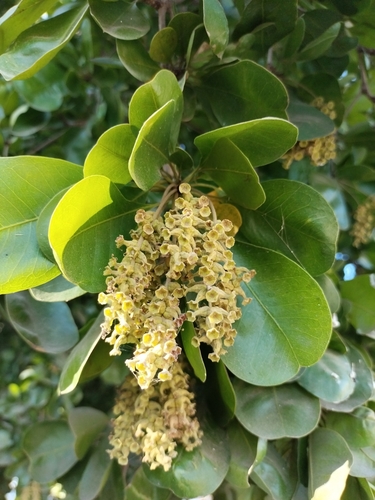
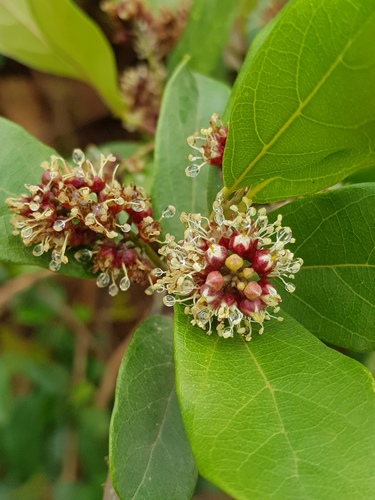
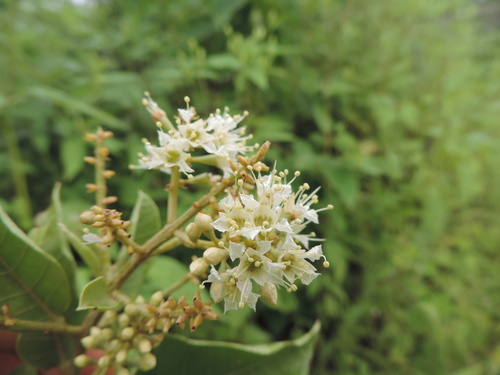
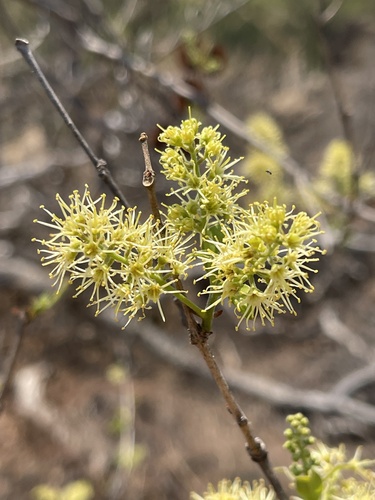
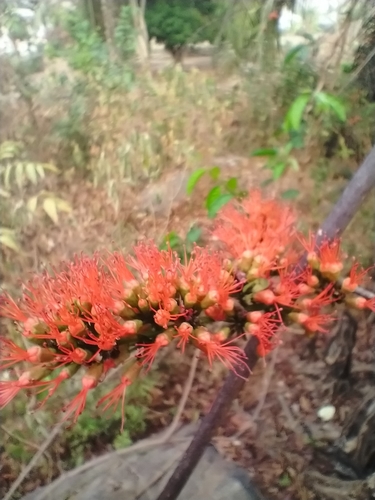
Flowers grow in dense clusters at the ends of branches.
Flower Structure
The small flowers have ovoid or oval bracts covered in thick fluff, no petals, and 10 stamens arranged in two cycles.
Ovary Structure
The ovary has one ventricle containing three pendulous ovules.
Fruit Characteristics
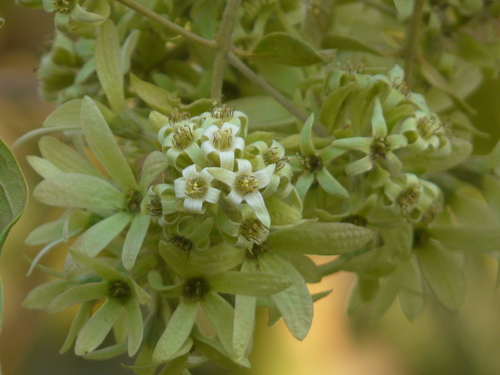
The fruit is fluffy, sham-winged, around 8 mm long, with five edges and five persistent calices that enlarge into a fluffy wing 10–14 mm long.
Sepal Characteristics
The sepals are prominent, hairy, and green.
Medicinal Potential Overview
The stem and leaves of Getonia floribunda are reported to have medicinal properties.
Traditional Water Source Use
Forest-dwelling communities revere this vine as a life-saver during summer, when local streams dry up: sections of the vine store accessible water that people use to quench thirst.
Leaf Medicinal Properties and Uses
The leaves are described as bitter, astringent, laxative, anthelmintic, depurative, diaphoretic, and febrifuge, and are used for intestinal worms, colic, leprosy, malarial fever, dysentery, ulcers, and vomiting.
Fruit Medicinal Uses
The fruits are used for jaundice, ulcers, pruritus, and skin diseases.