About Geothlypis velata (Vieillot, 1809)
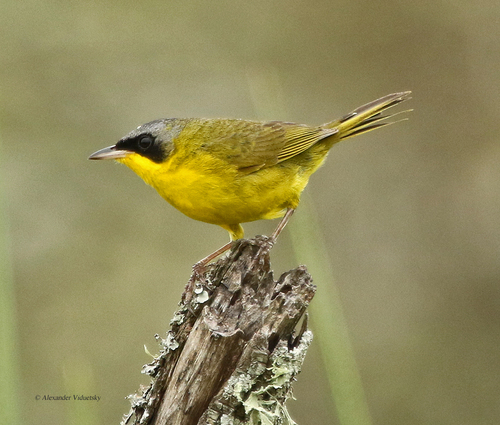
The southern yellowthroat, with the scientific name Geothlypis velata, is classified as a New World warbler. It has several distinct resident breeding populations distributed across South America, ranging from southeastern Peru, eastern Bolivia, and southern Amazonian Brazil south to Argentina and Uruguay. This species was formerly treated as a subspecies of the masked yellowthroat. Its breeding habitat consists of marshes and other wet areas that support dense low vegetation. Southern yellowthroats are typically encountered in pairs and do not form associations with other species. They most often behave as skulkers, but will occasionally emerge into the open, particularly to sing. They feed on insects including caterpillars, dragonflies, damselflies, grasshoppers and beetles, as well as spiders, and usually capture their prey within dense vegetation. Their vocalizations include a fast chattering call that is quite distinct from the calls of other yellowthroat species, plus a more typical sharp chip note.