About Geokichla sibirica (Pallas, 1776)
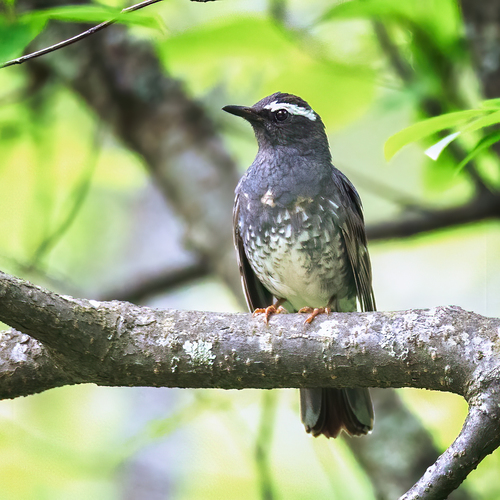
The Siberian thrush, with the scientific name Geokichla sibirica, belongs to the thrush family Turdidae. The genus name Geokichla derives from Ancient Greek: geo- means "ground-" and kikhle means "thush". Its specific epithet sibirica is Latin for Siberia. This species breeds in the taiga of Siberia. It is strongly migratory: most individuals travel to southeastern Asia for the winter. It is a very rare vagrant to western Europe, and the bird itself is very secretive. Siberian thrushes are similar in size to song thrushes. They are omnivorous, feeding on a wide range of insects, earthworms, and berries. Male Siberian thrushes are dark blue-grey across their upperparts and underparts, with a white stripe above the eye. Their lower belly and flanks are white. Females are much browner overall, with a buff stripe above the eye. A prominent identification feature for both sexes visible in flight is a black band on the white underwings, a trait this species shares with the scaly thrush.