About Geogenanthus ciliatus G.Brückn.
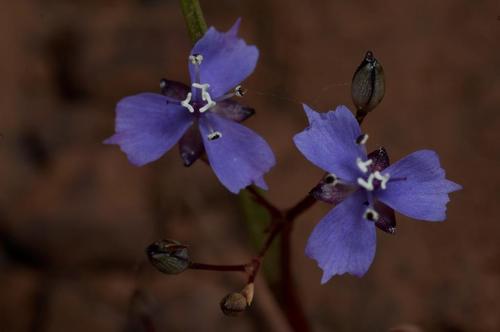
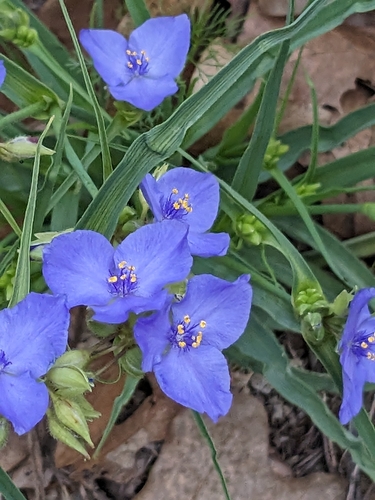
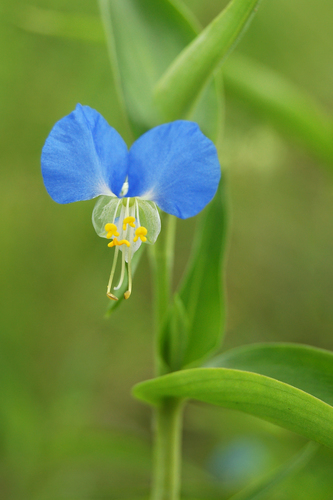
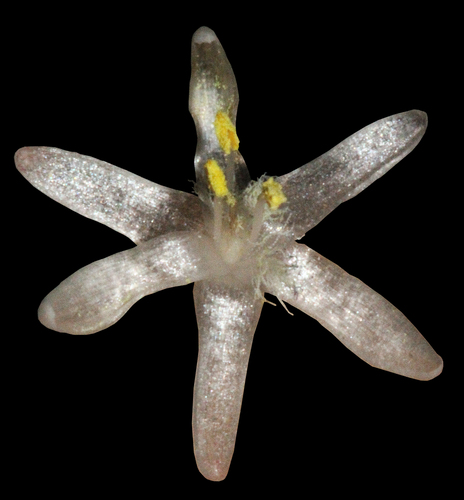
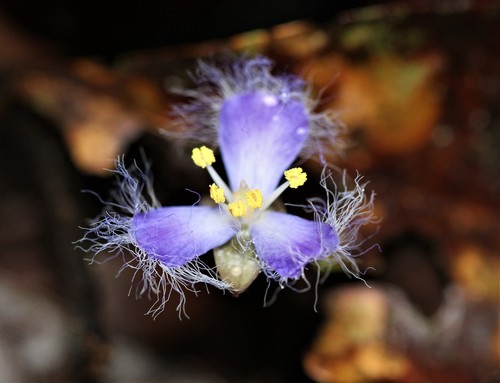
The accepted scientific name for this species is Geogenanthus ciliatus G.Brückn. For this species, aerial stems characteristically bear only one round, succulent leaf at their apex; rarely, an aerial stem may produce two leaves. This differs from other species in the Geogenanthus genus, which typically have 3 or more leaves (and less commonly 2 leaves) arranged in a terminal rosette. The upper surface of G. ciliatus leaves is glossy and dark green, while the lower leaf surface is velvety and dark purple. Flowers grow on long pedicels that can reach up to 5 cm, arranged in one or sometimes two scorpioid cymes. These cymes sit on a short peduncle that grows from the basal node or nodes of the aerial stem. Each flower has three green-brown sepals, three blue or purple petals fringed with moniliform trichomes, 5 to 6 stamens, and one single tricarpellate pistil. The three upper stamens are bearded with moniliform hairs. Geogenanthus ciliatus is native to Upper Amazonia. It has been recorded growing from the mid-elevation eastern slopes of the Andes in Ecuador, extending through the lowlands of northern Peru. It most commonly grows on the floor of primary rainforests. The species adapts well to low-light environments, and is sometimes grown as a houseplant or conservatory plant in temperate climates.