About Gentiana algida Pall.
Taxonomy and Distribution
Gentiana algida, commonly known as the snow gentian, is a perennial herbaceous plant belonging to the Gentianaceae family. Native to the high-altitude regions of Europe and Asia, it thrives in alpine meadows and rocky slopes.
Size and Foliage
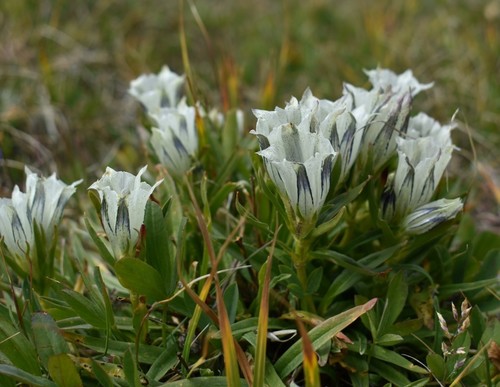
The plant typically reaches a height of 10-20 cm and features a basal rosette of lance-shaped, dark green leaves.
Flowering Period
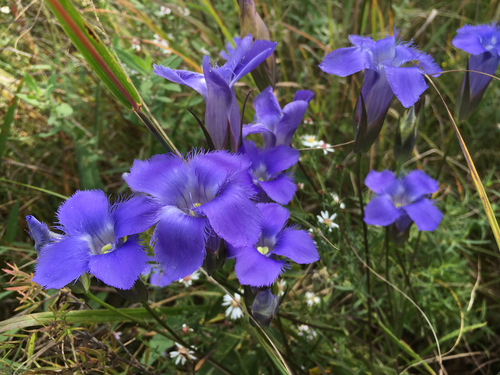
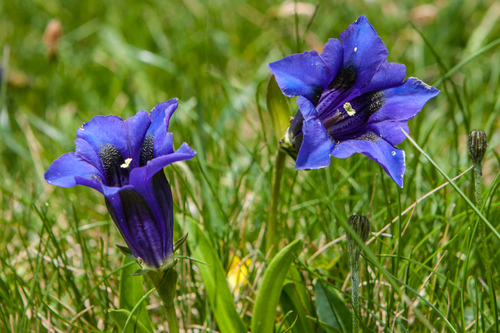
This plant produces striking blue-violet flowers that bloom from July to September.
Flower Characteristics
The trumpet-shaped flowers have five petals fused at the base, forming a tube-like structure, and are about 2-3 cm long with white stripes on the petals.
Traditional Digestive Use
Gentiana algida has been used for medicinal purposes for centuries, primarily due to its bitter taste, which stimulates digestion.
Additional Medicinal Properties
Additionally, it is believed to have anti-inflammatory properties, making it useful for treating various ailments such as fever, arthritis, and liver disorders.
Cultivation Requirements
Snow gentian requires well-drained soil with good moisture retention and thrives in either full sun or partial shade, depending on its growing conditions.
Propagation Methods
It can be propagated through seeds or by dividing the root system during early spring or autumn.
Ornamental Value
Overall, Gentiana algida is an attractive alpine plant that enhances gardens or rockeries with its beauty and color.
Overall Medicinal Value
Furthermore, when used appropriately by herbalists or traditional healers, it offers valuable medicinal benefits.