About Genista tinctoria L.
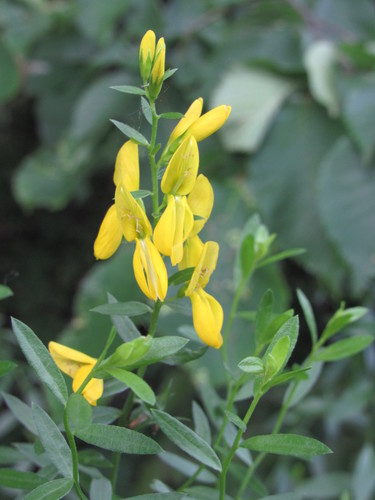
Genista tinctoria L. is a variable deciduous shrub that reaches 60 to 90 centimetres (24 to 35 inches) in height, and spreads to 100 centimetres (39 inches) in width. Its stems are woody, slightly hairy, and branched. It bears alternate, nearly sessile leaves that are glabrous and lanceolate. Golden yellow, pea-shaped flowers grow in erect narrow racemes from spring through early summer. Its fruit is a long, shiny pod shaped like a green bean pod. This species is native to meadows and pastures in Europe and Turkey. Numerous cultivars have been selected for garden planting, and the cultivar 'Royal Gold' has earned the Royal Horticultural Society's Award of Garden Merit. As the species' Latin and common names suggest, this plant has been used since ancient times to produce a yellow dye. When this yellow dye is combined with woad, it can also produce a green colour. The isoflavone genistein was first isolated from this plant in 1899, which is how the chemical compound received its name. The flowering twigs are the portion of the plant used for medicinal purposes. The plant has been used in folk medicine and herbalism to treat a range of complaints, including skin diseases, and this use continues into modern times.