About Gekko kuhli (Stejneger, 1902)
Gliding Adaptations
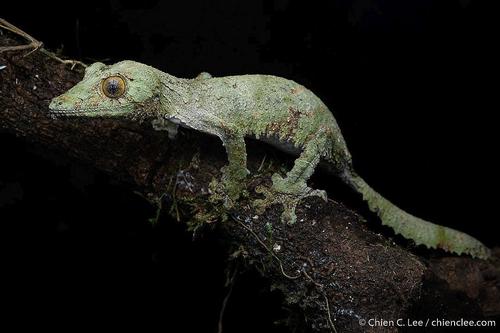
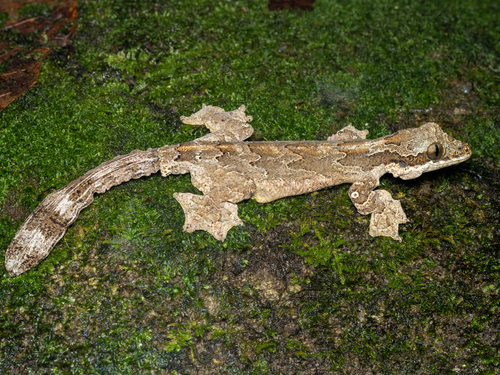
Gekko kuhli has several skin adaptations that let it glide over short distances: flaps on each side of its body, webbed feet, and a flattened tail.
Camouflage Traits
This gecko has exceptional camouflage; the skin flaps along its sides help it blend in with tree bark, and often only its eyes give it away against its surroundings.
UV Exposure Adaptation Rationale
This camouflage strategy has required additional adaptations to protect the species from increased ultraviolet (UV) exposure.
Thermoregulation Trait
Though G. kuhli is nocturnal, it is considered heliothermic because it receives extended sun exposure while resting during the day.
UV Protection Adaptations
This elevated UV exposure has led to the evolution of pigmented internal organs that protect the gecko's vital organs from UV damage.
Adhesion Adaptations
Like many other gecko species, Kuhl's flying gecko has evolved complex toe pads covered in microscopic hairs that allow it to adhere to nearly any surface, including glass.
Confirmed Distribution
Gekko kuhli is native to the Malay Peninsula, which includes southern Thailand, Malaysia, and Singapore, as well as many nearby islands and the Greater Sunda Islands, covering the larger islands of Sumatra, Java, Borneo, and Sulawesi plus many smaller islands.
Unconfirmed Distribution Reports
Reports of its presence in Myanmar and India's Nicobar Islands are unconfirmed.
Preferred Habitat
The preferred natural habitat of Gekko kuhli is forest.