About Gehyra lazelli (Wells & Wellington, 1985)
Coloration
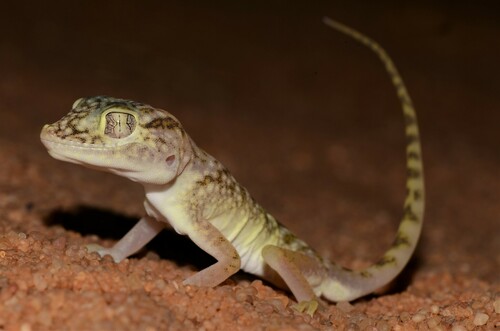
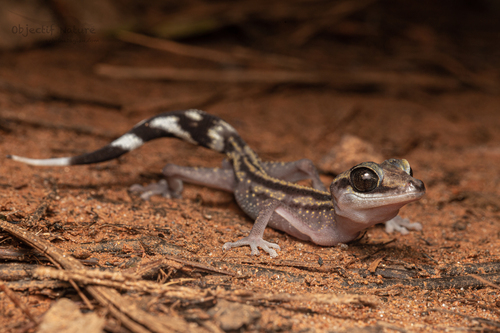
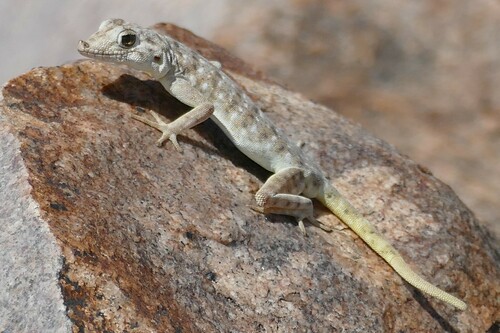
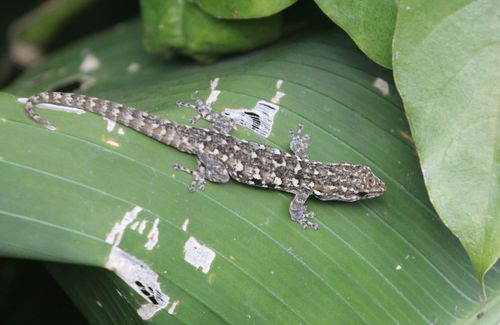
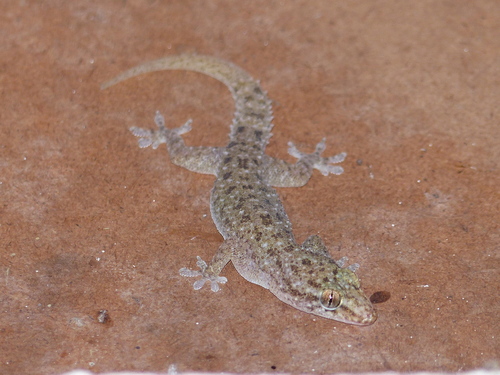
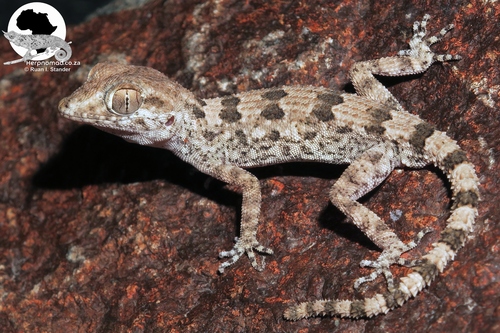
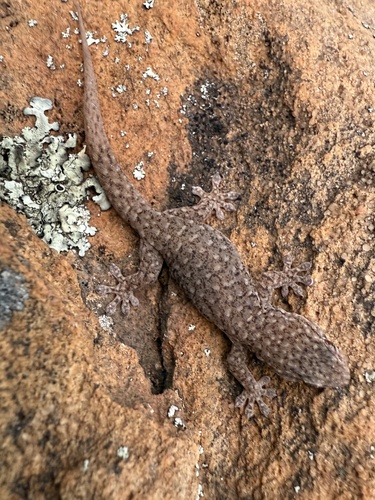
Gehyra lazelli (Wells & Wellington, 1985) varies in color from dull brown to grey brown, with a speckled, variegated pattern of white spots that somewhat resembles patches of lichen growing on exposed rock.
Camouflage Function
This variegated patterning works as camouflage from predators such as birds, letting the species blend into exposed rock surfaces and leaf litter.
Body Morphology
It has a relatively flat body, a slender tail, and uniform homogeneous scales across its body.
Toe Structure
A key identifying feature of G. lazelli is that its third and fourth toes are free of webbing, while all other fingers and toes are webbed and have surface pads to improve grip.
Endemic Status
This species is endemic to Australia.
Core Distribution Range
Its known range extends from central and western New South Wales to the Nullarbor Plain in South Australia.
Speculated Range Extension
Sightings near the northwestern Victorian border have led to speculation that the species’ range also extends into the semi-arid fringe areas of Victoria.
Primary Habitat
G. lazelli is most commonly found sunning on exposed rock, or hiding in crevices within rocky outcrops and stony hills.
Secondary Habitat & Foraging Timing
It may also be found under thick bark or fallen logs, and forages for food at night in these rocky areas.
Habitat Importance
The species depends on these rocky outcrops for energy, food, and protection from predators including birds.
Feeding Generalism
Most lizards are generalist feeders that consume animal protein and are not picky eaters, and G. lazelli follows this pattern.
Diet Composition
It feeds on small arthropods, eating any that are small enough to fit inside its mouth.
Genus Classification
G. lazelli belongs to the genus Gehyra, which contains 44 distinct Australian species found across most of arid, semi-arid, and tropical northern Australia.
Congeneric Widespread Species
The most common and widespread species in this genus is Gehyra variegata, the tree dtella, which occurs across most of Australia.
Habitat Threat
Extensive land clearing of Australia’s interior woodlands has caused increasing fragmentation of G. lazelli’s native habitat.
Reproductive Mode
G. lazelli reproduces oviparously, meaning it lays eggs that hatch into live young.
Clutch & Nesting Traits
Like most geckos, it has a clutch size of two eggs, and has been observed laying eggs in communal nests shared with the same or similar gecko species.
Regional Reproductive Adaptation Context
In cooler Australian regions, some lizard species use viviparity to give birth to live young, since cooler temperatures reduce the reproductive success of oviparous egg-laying.