About Gazania rigens (L.) Gaertn.
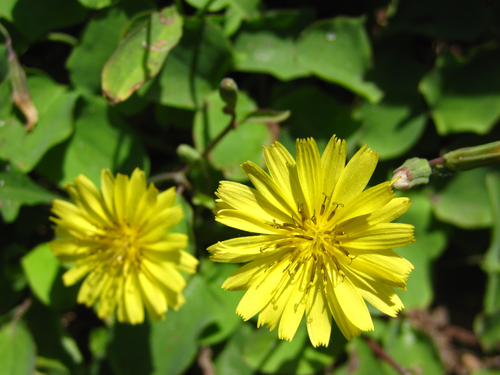
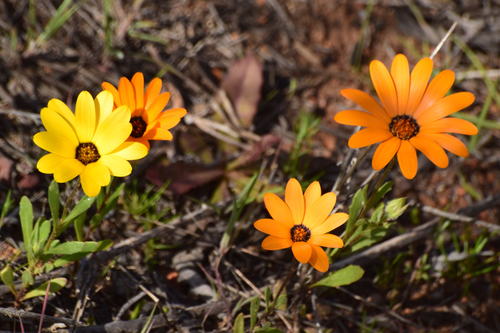
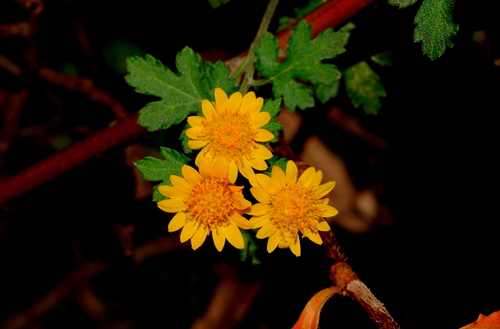
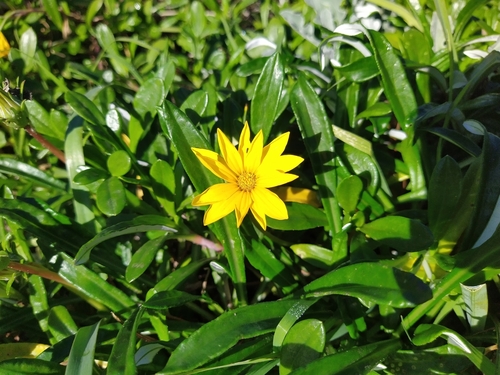
Gazania rigens (L.) Gaertn. is a spreading, low-growing, half-hardy perennial that reaches 50 cm (20 in) tall and wide. It has blue-grey foliage and produces brilliant yellow, daisy-like composite flowerheads throughout the summer. This herbaceous plant grows as a perennial in South Africa and Mediterranean regions, and as an annual in gardens located in colder regions. It rarely exceeds 30 cm (12 in) in height, and forms often very abundant tufts. All of its leaves are basal, numerous, narrow and more or less lanceolate, usually with entire margins, and sometimes pinnatilobed. The upper surface of the leaves is shiny green, while the underside is grayish white. Like all composite plants, Gazania rigens produces flowers arranged in flower heads that are often mistaken for single simple flowers. The capitula are solitary at the end of peduncles that extend just beyond the leaves. Each capitulum is formed by a central disc of tubular flowers, surrounded by ligulate peripheral flowers that vary widely in color. Orange-yellow flowers are the most common, and often have black spots at the base of the ligules. The fruit produced by this species is an achene that contains several seeds. Gazania rigens is cultivated for its brilliant yellow blooms that appear against blue-grey foliage from late spring through summer. Plants prefer a sunny position, and are tolerant of dry conditions and poor soils. It is quite indifferent to soil type, and requires full sun; its flower heads close when kept in shade or during overcast weather. It adapts well to drought, heat, and strong sun, unlike many other flowering plants. In the Northern Hemisphere, it flowers from March to October, though flowers are more numerous and larger when grown in spring. In temperate regions, this plant is usually grown as a half-hardy annual, even though it can tolerate light frosts.