About Gaylussacia tomentosa (A.Gray) Small
Gaylussacia tomentosa, commonly called the hairy dangleberry or hairytwig huckleberry, is a plant species native to the coastal plains of the southeastern United States, where it occurs in Alabama, Georgia, Florida, North Carolina, and South Carolina. In 1878, Asa Gray first formally described this species under the name Vaccinium tomentosum. It was given its current accepted name Gaylussacia tomentosa in 1897.
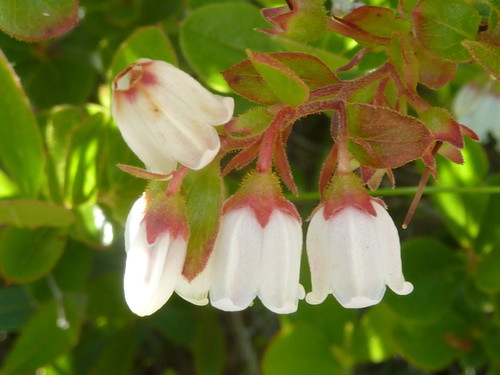
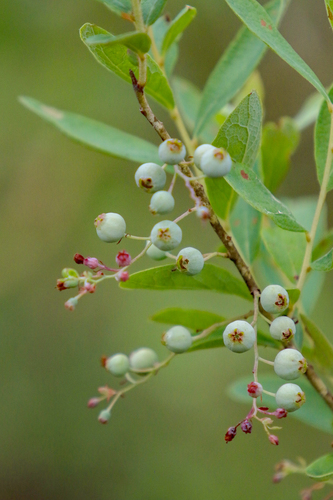
This species is a shrub that grows up to 200 cm (80 inches) in height. It spreads via underground rhizomes, and can sometimes form very large colonies. The upper surface of its leaves is dull green or yellow-green, while the underside is pale green and waxy. Its flowers are greenish-white, and grow in dangling clusters of 2 to 4 individuals. Fruits are most often dark blue, though occasionally they are white, and are sweet and juicy.
Gaylussacia tomentosa has been recorded growing in sandhills, pine flatwoods, and xeric coastal fringe sandhills. It shows a preference for both dry and moist loamy sands.