About Gaultheria shallon Pursh
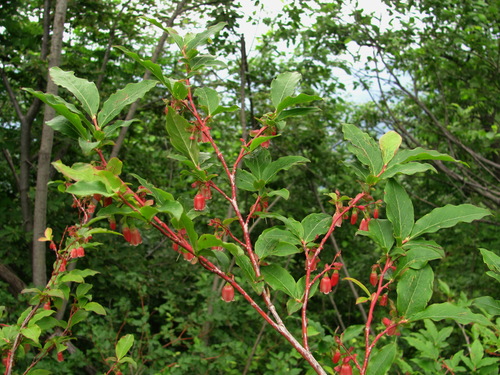
Gaultheria shallon Pursh grows 0.4 to 3.05 metres (1+1⁄2 to 10 feet) tall, with a growth habit ranging from sprawling to erect. It has loose to dense branching and often forms dense, nearly impenetrable thickets. Its twigs are reddish-brown with shredding bark; twigs can live 16 years or more, but only produce leaves during their first few years.
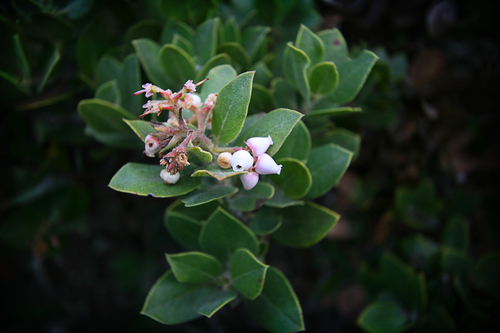
The leaves of Gaultheria shallon are alternate, evergreen, leathery, thick, and egg-shaped. The upper leaf surface is shiny and dark green, while the lower surface is rough and lighter green. Each leaf has fine, sharp serrations, measures 5 to 10 centimetres (2 to 4 inches) long, and typically lives 2 to 4 years before being replaced.
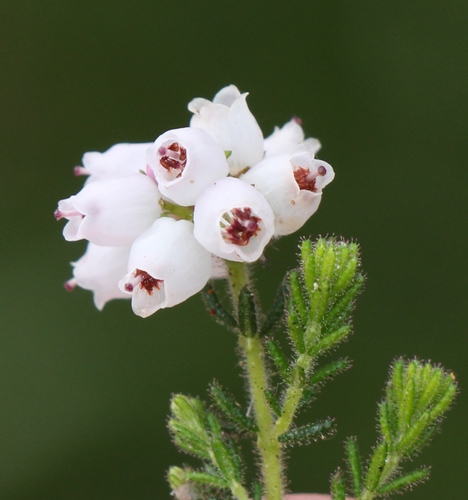
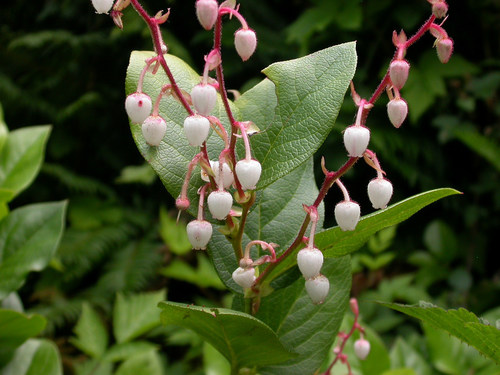
Flowers form a bracteate, one-sided raceme inflorescence that holds 5 to 15 flowers at branch ends. Each flower has a deeply five-parted calyx covered in glandular hairs, and an urn-shaped five-lobed corolla (petals) that ranges from pink to white, is glandular to hairy, and measures 7 to 10 millimetres (1⁄4 to 3⁄8 inches) long.
The fruit of this species is reddish to blue, rough-surfaced, covered in tiny hairs, and nearly spherical, with a diameter of 6 to 10 millimetres. These fruits are pseudoberries: capsules formed by a fleshy outer calyx. Each fruit contains an average of 126 brown, reticulate seeds around 0.1 millimetres in length, and these berries are edible.
Salal, the common name for this plant, is distributed from Southeast Alaska, through British Columbia, Washington, and Oregon, along most of the California coast. It grows as far north as Baranof Island, Alaska, and western poison oak is a common associate of salal in the California Coast Ranges.
Salal is adapted to a fire regime of infrequent fires, with intervals between fires ranging from 50 to over 500 years. While aboveground plant material may be consumed by fire, soil-bound rhizomes survive and resprout after light to moderate fires. Severe fires occurring on dry, shallow soil penetrate to the roots and kill the plant.
Deer and elk browse salal leaves, and salal is an important winter food source for these species. Browsing is heaviest when other low-growing plant species become covered in snow. In Western Washington, salal leaves made up 30.4% of deer diet by volume in January, compared to only 0.5% in June. Salal leaves have relatively low nutritional value, and deer that feed exclusively on salal leaves develop signs of malnutrition, confirming its role as a winter emergency food for ungulates. Beavers and white-footed voles feed on salal leaves, as do domestic goats and sheep in some regions.
Band-tailed pigeons, wrentits, various grouse species, and many songbirds eat salal fruit, as do mammals including red squirrels, black bears, black-tailed deer, Townsend's chipmunks, and Douglas squirrels. Salal flowers are pollinated by hummingbirds, bees, and flies, and are also browsed by deer. The plant provides important cover and hiding habitat for a wide range of species, from large ungulates to small birds and mammals.
The dark blue berries and young leaves of salal are edible, act as effective appetite suppressants, and both have a unique flavor. For some Native American tribes, salal berries were a significant food resource; tribes ate the berries fresh and dried them into cakes. Berries were also used as a sweetener, and the Haida people used them to thicken salmon eggs. Salal leaves were sometimes used to add flavor to fish soup.
More recently, salal berries are used locally in jams, preserves, and pies. They are often combined with Oregon-grape, because salal's mild sweetness partially masks Oregon-grape's tartness. Salal is widely cultivated as an ornamental within and outside of its native range, and works well for ground cover and landscaping. In the Pacific Northwest, harvesting Gaultheria shallon is the core of a large industry that supplies cut evergreens globally for use in floral arrangements. It is grown in native plant gardens and sold under the name "Lemon Leaf".
Local native peoples have used this species for its medicinal properties for generations, though its medicinal uses are not widely known. Salal leaves have an astringent effect, making it an effective anti-inflammatory and anti-cramping herb. Leaves prepared as a tea or tincture are thought to reduce internal inflammation, including inflammation of the bladder, as well as ease symptoms of stomach or duodenal ulcers, heartburn, indigestion, sinus inflammation, diarrhea, moderate fever, inflamed or irritated throat, and menstrual cramps. An external poultice made from the leaf can be used to reduce discomfort from insect bites and stings.