About Gaultheria hispida R.Br.
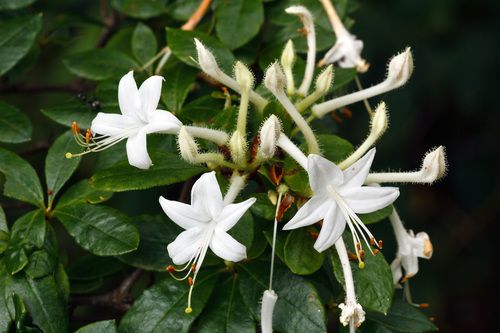
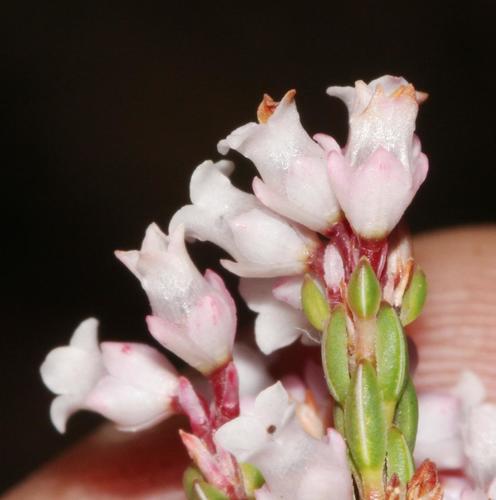
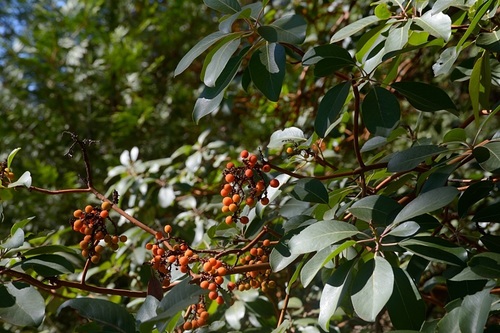
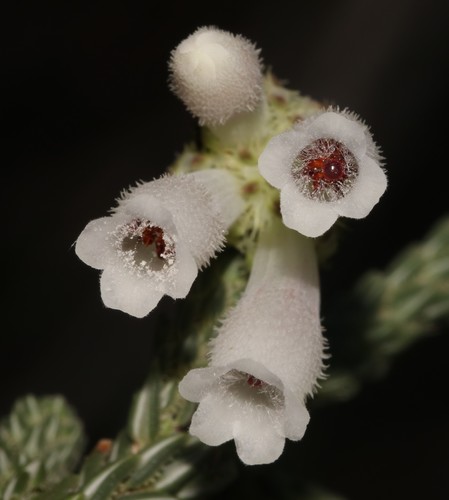
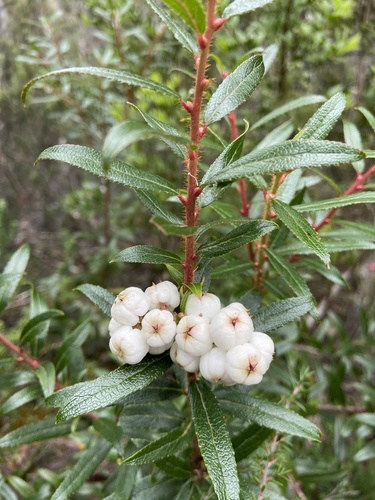
Gaultheria hispida R.Br. is a small, erect, multi-branched shrub belonging to the plant family Ericaceae. In sheltered sites such as forests, it can grow up to 2 metres (6 feet 7 inches) tall, while it will stay smaller in more exposed alpine locations. Its mature leaves reach 4–9 centimetres (1.6–3.5 inches) in length; they are dark green and glossy, feature depressed veins, have finely serrated margins, and carry a copper tinge. The plant’s stems are typically red, and it bears terminal clusters of small, white, urn-shaped flowers at stem apices. Flowering occurs from spring through summer, and in autumn, the plant produces distinctive snowy white sepals that enclose reddish capsules, commonly referred to as its "fruit". It is considered highly representative of Ericaceae due to its phylogenetic significance. The genus Gaultheria is distributed across Australia, New Zealand, Asia, and both North and South America. Gaultheria hispida itself is found exclusively in Tasmania and parts of Victoria, Australia. Within Victoria, the species is classified as endangered, while it is considered of conservation significance in Tasmania but is neither threatened nor uncommon there. G. hispida is most abundant in cool, moist mountain or alpine areas, at elevations between 250–1,100 metres. Its largest populations lie on the western side of Tasmania, west of Tylers Line, where it grows on ancient fold province soils in regions dominated by wet forests and alpine vegetation. Smaller patches of the species east of Tyler’s Line are found primarily in alpine areas of northeast, southeast, and central northern Tasmania, growing on younger fault province soils. Tasmania’s unique geological history of repeated glaciation allowed many species, including G. hispida, to expand their geographic ranges: glaciation cycles caused alpine zones to contract and expand, dispersing species beyond their original alpine habitats, and G. hispida has persisted in these newly colonized areas. Other suitable habitats for G. hispida in Tasmania include rainforest, wet eucalypt forest, and montane vegetation. G. hispida can be easily propagated from cuttings or seeds, which makes it a popular plant for garden cultivation. It grows best in consistently moist, well-drained sites with loamy and/or fertile soils. The fruit of G. hispida is edible and has a bitter taste. It was commonly collected as bushfood by Tasmanian Aboriginal People, and was also eaten by early European settlers. Other species in the genus Gaultheria have been used to make teas and jellies, and have been reported to have natural anti-inflammatory properties.