About Gasteracantha fornicata (Fabricius, 1775)
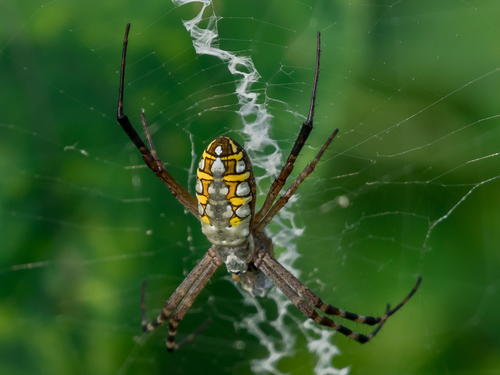
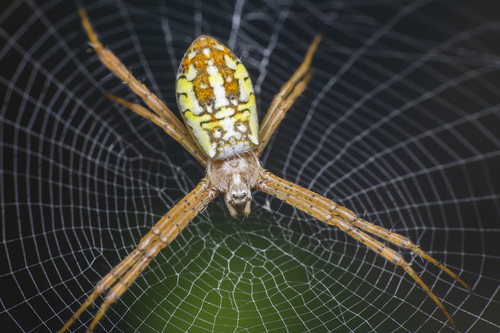
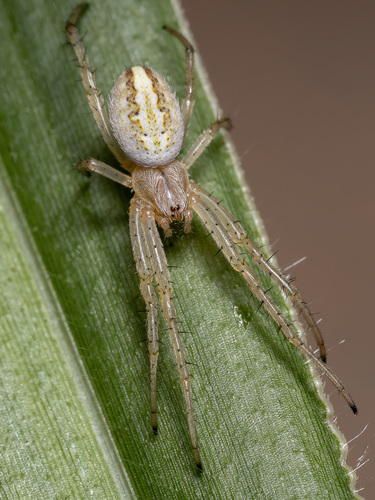
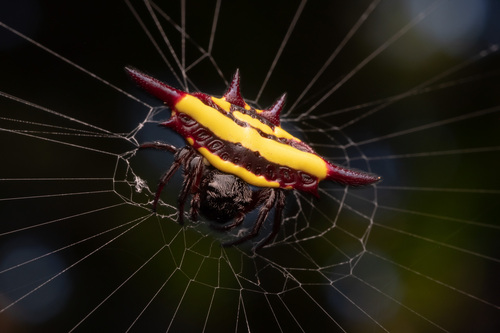
Gasteracantha fornicata is a small spider with multiple morphs that differ in size and colour. It has exoskeletal spines across its dorsal body surface. The wide cephalothorax of this species means it is less mobile than similarly sized spiders. Males are typically around 2 millimeters long, while females can grow up to 12 millimeters long. Females have distinct contrasting stripes across their dorsal region that attract prey; these yellow or white bands stand out sharply against the spider's dark body. Like other orb-weaving spiders, this species' bright colouration helps attract prey. On the ventral side, the body is darker and marked with small yellow spots. Like other spiny spiders, Gasteracantha fornicata has a hard exoskeleton with dorsal spines that provide protection from predators. Its bright colouration is also thought to signal to predators that it is not a suitable prey item. Female Gasteracantha fornicata have two distinct colour morphs: one with bright yellow bands, and one with white bands, with spectral peaks at 447 nanometers and 496 nanometers respectively. Even though this species can have white stripes, its white markings do not have the same UV properties as those of the closely related Gasteracanthra cancriformis. Different coloured morphs occur at different frequencies across different regions of the species' rainforest habitat. Variation in light exposure between brighter forest clearings and areas shaded by cloudy sky overhang creates distinct microhabitats for Gasteracantha fornicata. Cloudiness levels act as a threshold that determines the frequency of each colour morph; specifically, white morphs are more common in darker areas because their colour creates better contrast against cloudy skies. Gasteracantha fornicata is native to northeastern Australian rainforests. It is found exclusively in rainforest, most often in the microhabitat along tree line borders. Variation in cloud coverage and presence of sunny clearings within its habitat affects the frequency of different female colour morphs. Long periods of rainfall in the region make the species' webs ineffective.