About Gasteracantha falcicornis Butler, 1873
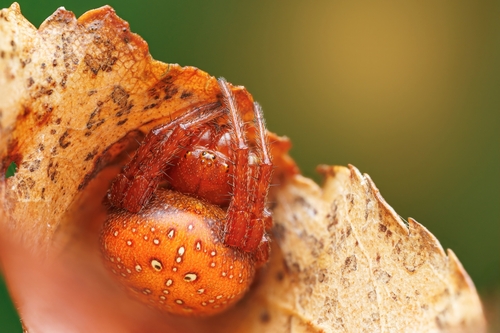
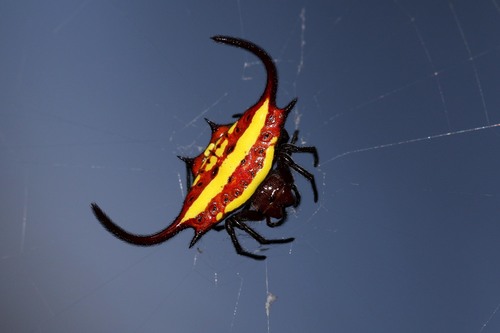
Gasteracantha falcicornis is a spider species first described by Butler in 1873. Females of this species are larger and more colourful than males. The female has a bright red abdomen marked with many deep black pits. It has a long, curved black horn on each side of the abdomen, plus two shorter, straight horns at the front and rear of the abdomen. This species is recorded from Malawi, Tanzania, Zambia, Eswatini and South Africa. In South Africa, it occurs across a wide geographic range in the provinces of KwaZulu-Natal and Mpumalanga, at altitudes ranging from 4 to 750 meters above sea level. Documented localities for the species include Empangeni, iSimangaliso Wetland Park (encompassing Fanie's Island, Kosi Bay Nature Reserve, Sodwana Bay National Park, and Lake Sibaya), Ngoye Forest, Tembe Elephant Park, Avoca, and Komatipoort. Gasteracantha falcicornis lives in orb webs, which it typically builds high in trees or tall shrubs, positioned above the observer's eye level. The bridge line of the web is often longer than the orb section of the web, creating the impression that the spider is floating in open space. Occasionally, the web is decorated with tufts of silk. Individuals of this species are active during the day, and do not remove their built webs.