About Garrulus glandarius (Linnaeus, 1758)
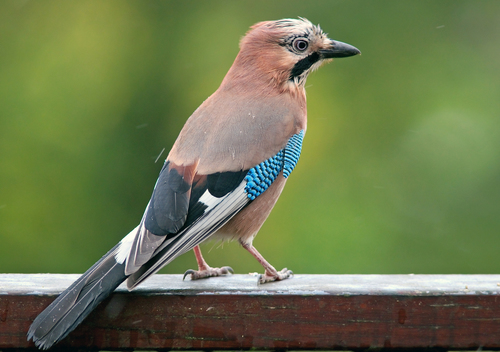
The Eurasian jay, with the scientific name Garrulus glandarius (Linnaeus, 1758), is a relatively small corvid that matches the size of the western jackdaw (Coloeus monedula). It measures 34–35 cm (13–14 in) in length and has a wingspan of 52–58 cm (20–23 in). The nominate race has body plumage that ranges from light rufous brown to pinkish brown. Its whitish throat is bordered on both sides by a prominent black moustache stripe. The forehead and crown are whitish with black stripes, and the rump is white. The upper surface of the wing has complex patterning, including black and white bars and a prominent bright blue patch marked with fine black bars. Its tail is mainly black. As a member of the widespread jay group, this species inhabits mixed woodland, particularly areas with oaks, and it regularly hoards acorns. In recent years, the bird has started moving into urban areas, which may be caused by ongoing erosion of its woodland habitat. Before large-scale commercial planting of oak trees began by humans, Eurasian jays were the main driver of movement and propagation for the European oak (Q. robur). Each Eurasian jay can spread more than a thousand acorns per year. Eurasian jays also bury acorns from other oak species. The National Trust has cited them as a major propagator of Northern Europe's largest holm oak (Q. ilex) population, located in Ventnor on the Isle of Wight. Jays have been recorded carrying single acorns as far as 20 km, and they are credited with enabling the rapid northward spread of oaks after the last ice age.