About Gardenia thunbergia Thunb.
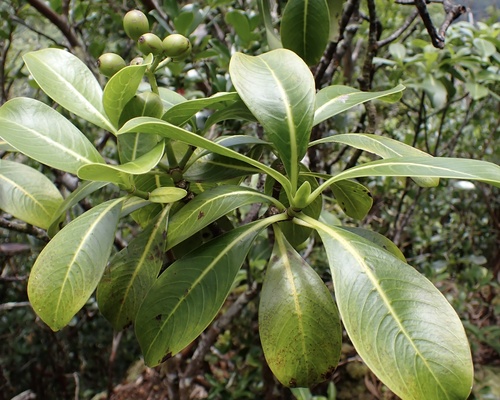
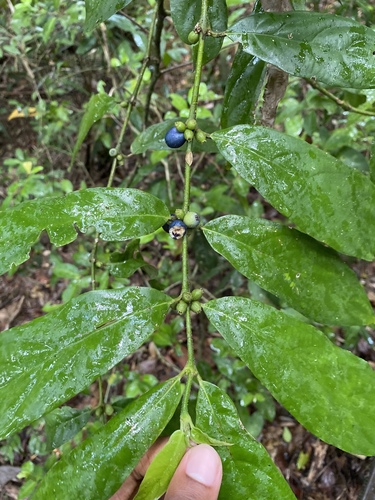
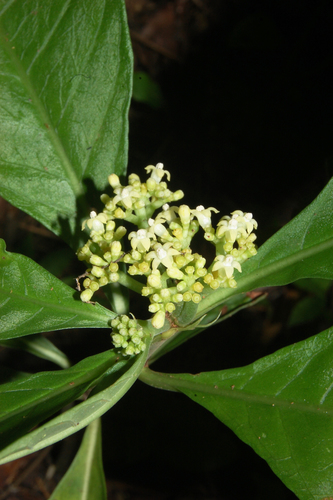
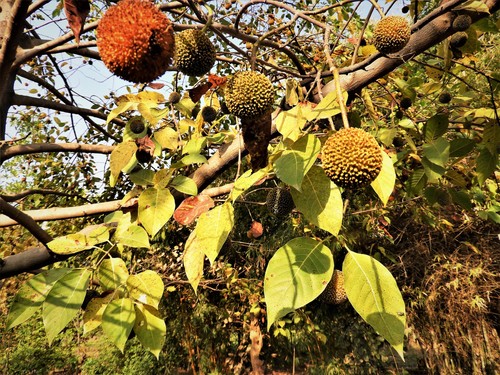
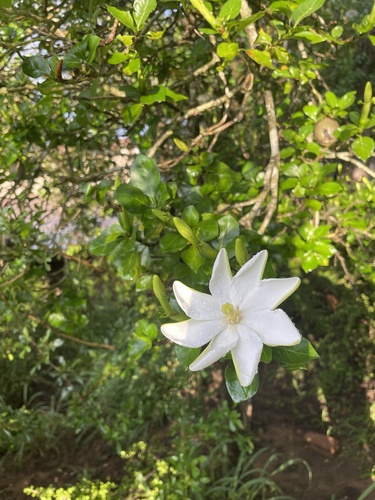
Gardenia thunbergia is a sturdy large shrub or small tree endemic to the southern and eastern regions of South Africa and neighbouring territories such as Eswatini. It grows mostly in forest or on forest margins, and occurs in the Eastern Cape, Natal and Transkei within South Africa. This species is densely twiggy and rigid, with smooth light-grey bark. It is horticulturally valuable, easy to grow, and can be used to form a strong hedge, though it is more commonly grown as a specimen plant; it is striking in appearance and long lived. Its abundant, extremely fragrant flowers are around 70 mm in diameter, with long tubes that can only be accessed by the proboscises of nocturnal hawkmoths. Its leaves are smooth, shiny, whorled and entire, and clustered at the ends of branchlets. The fruit of Gardenia thunbergia is oval, hard, woody and fibrous, measuring around 80 mm long and 40 mm in diameter. It is light grey with small raised white spots, and if not eaten by large browsers or elephants, it will remain on the tree for years. Common names for this species include forest gardenia, mutarara (in the Shona language), tree gardenia, white gardenia and wild gardenia. In Afrikaans, it is known variously as buffelsbol (“buffalo ball”), stompdoring (“blunt thorn”), or wildekatjiepiering (“wild gardenia”). This tree is a food plant for the larvae of some hawk moth species, such as the Oriental bee hawk moth Cephonodes hylas, and it is a favoured sap tree for Carlisis wahlbergi. Gardenia thunbergia was first introduced to Kew as early as 1773. It belongs to the very large plant family Rubiaceae, which also includes plants such as coffee (Coffea arabica), quinine (Cinchona), and many ornamental trees and shrubs with showy flowers. In Karanga traditional medicine, this plant is considered a means of repelling witchcraft. Members of the Johane Masowe Apostolic Church carve crosses from this mutarara plant, which they believe protects them against evil spirits.