About Garcinia mangostana L.
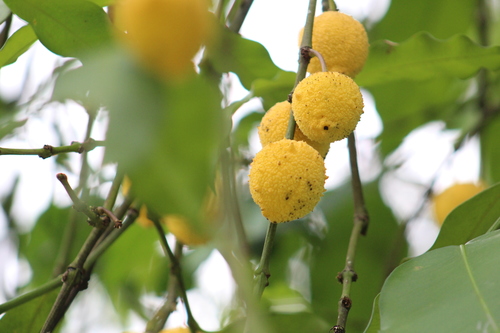
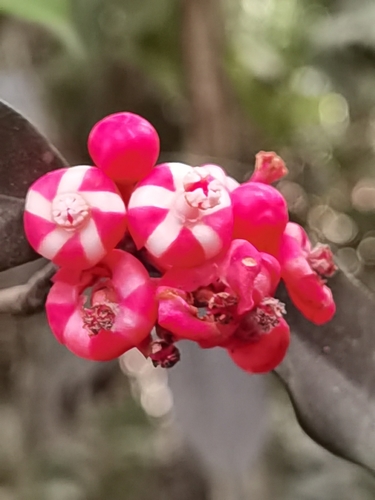
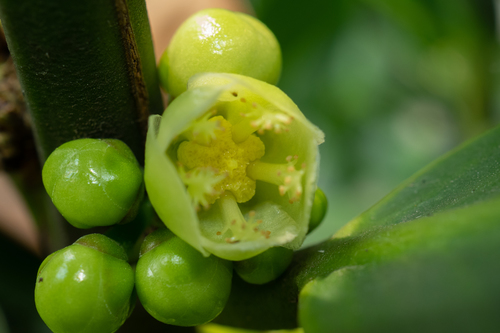
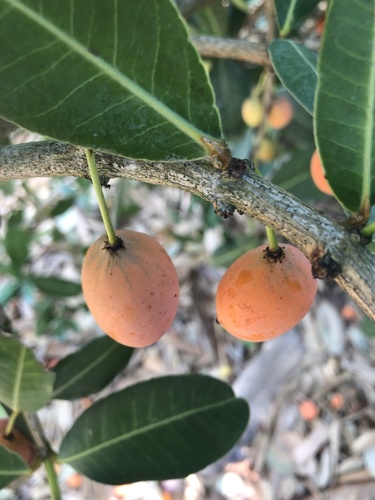
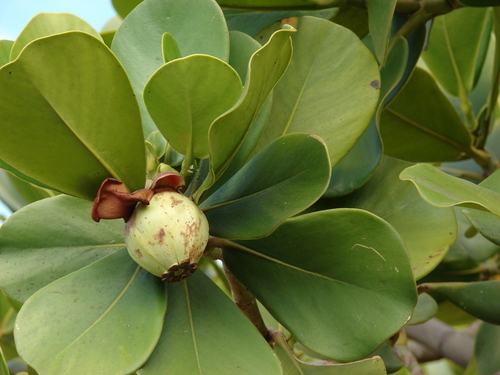
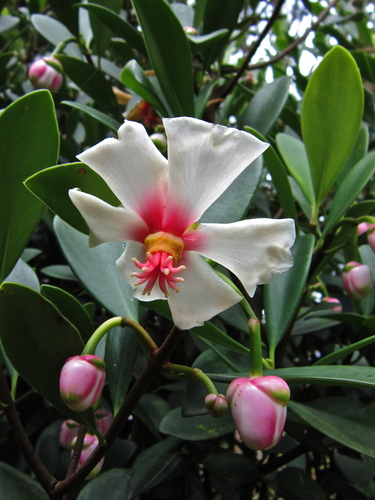
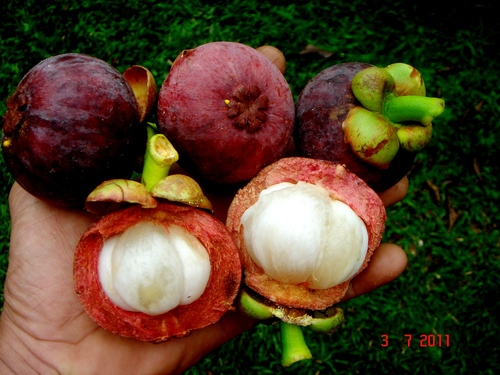
Garcinia mangostana L., commonly known as purple mangosteen (sometimes spelled mangostan), is a tropical evergreen tree that produces edible fruit. It is native to the Malay Peninsula and Borneo, and has been widely cultivated in tropical Asia since ancient times. Today it is grown primarily in Southeast Asia, southwest India, and other introduced tropical locations including Colombia, Puerto Rico, and Florida. Mature trees reach 6 to 25 meters (19.7 to 82.0 feet) in height. When ripe, mangosteen fruit has sweet, tangy, juicy, somewhat fibrous flesh made of fluid-filled vesicles, surrounded by an inedible deep reddish-purple outer rind (called the exocarp). The fragrant edible part surrounding each seed is the endocarp, the inner layer of the ovary. Mangosteen seeds match almonds in size and shape. The genus Garcinia also includes several lesser-known fruit-bearing species, such as button mangosteen (G. prainiana) and charichuelo (G. madruno). Mangosteen is most often propagated from seedlings. Vegetative propagation is difficult, and seedlings are more robust and produce fruit earlier than plants grown via vegetative propagation. Mangosteen produces a recalcitrant seed that is not strictly a true seed; instead, it is a nucellar asexual embryo. Because seed formation happens without sexual fertilization, resulting seedlings are genetically identical to the mother plant. If the seed is allowed to dry out, it dies quickly. When soaked, seeds germinate in 14 to 21 days, after which young plants are grown in small pots in a nursery for around 2 years. When trees reach approximately 25 to 30 cm (10 to 12 in) tall, they are transplanted to open fields at a spacing of 20 to 40 m (66 to 131 ft). After transplanting, fields are mulched to control weeds. Transplanting is done during the rainy season, because young trees are likely to be damaged by drought. Young trees need shade, so intercropping with banana, plantain, rambutan, durian, or coconut leaves is effective. Coconut palms are most commonly used for this purpose in areas with long dry seasons, and they also provide shade for mature mangosteen trees. An additional benefit of intercropping for mangosteen cultivation is weed suppression. Tree growth slows when temperatures fall below 20 °C (68 °F). The ideal temperature range for growth and fruit production is 25–35 °C (77–95 °F), with relative humidity over 80%. The maximum tolerable temperature is 38–40 °C (100–104 °F), at which both leaves and fruit are prone to scorching and sunburn. The minimum tolerable temperature is 3–5 °C (37–41 °F). Young seedlings prefer high levels of shade, and mature trees are shade-tolerant. Mangosteen trees have a weak root system, and prefer deep, well-drained soils with high moisture content; they often grow naturally on riverbanks. This species does not adapt well to limestone soils, alluvial soils, or sandy soils with low organic matter. Mangosteen requires well-distributed annual rainfall, under 40 mm per month, plus a 3–5 week dry season. Trees are sensitive to water availability, and fertilizer needs increase with tree age, regardless of growing region. Mangosteen fruits take 5–6 months to mature, and are harvested when their outer pericarps turn purple. Various parts of the mangosteen plant have a history of use in traditional medicine, most commonly in Southeast Asia, where it has been used to treat skin infections, wounds, dysentery, urinary tract infections, and gastrointestinal complaints. However, there is no high-quality clinical evidence to confirm any of these effects. Dried mangosteen fruits are shipped to Singapore to be processed for medical use, which are then used for dysentery, skin disorders, and various other minor diseases across multiple Asian countries. There is no reliable evidence that mangosteen juice, puree, bark, or extracts are effective treatments for any human disease. Mangosteen twigs have been used as chew sticks in Ghana. In Thailand, the wood has been used to make spears and cabinetry. In China, mangosteen fruit rind has been used for tanning leather.