About Ganoderma tsugae Murrill
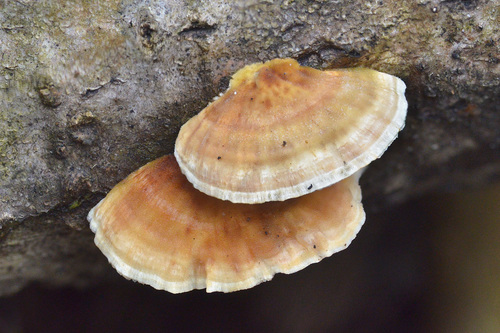
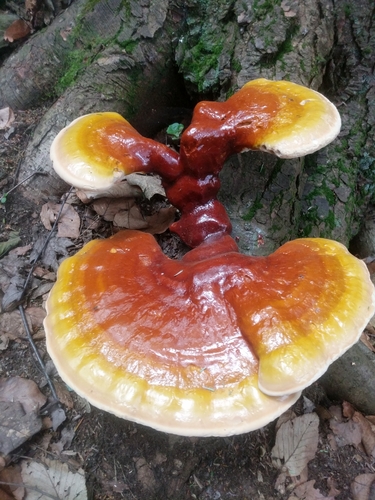
Ganoderma tsugae, also called hemlock varnish shelf, is a flat polypore mushroom in the genus Ganoderma. It is closely related to and strongly resembles Ganoderma lucidum, but unlike G. lucidum, G. tsugae usually grows on conifers, particularly hemlocks. Like G. lucidum, G. tsugae is non-poisonous but generally considered inedible, due to its solid woody texture. However, teas and extracts made from its fruiting bodies are claimed to allow medicinal use of its contained compounds, a claim that remains controversial in the scientific community. Hot water extraction (the method used to make tea) is very effective for extracting polysaccharides, while alcohol or combined alcohol and glycerin extraction is more effective for triterpenoids. The fresh, soft new growth of the mushroom’s "lip" can be sautéed and prepared like other edible mushrooms. Even in this early, non-woody stage, it is still tough and chewy. Similar to G. lucidum, G. tsugae is purported to have medicinal properties, including use as a dressing for skin wounds. While phylogenetic analysis has improved the differentiation of many closely related Ganoderma species, there is still disagreement over which species hold the most medicinal properties. Both natural and artificial factors, such as growing conditions and preparation method, can also affect the medicinal value of this species. Studies conducted in mice have found that G. tsugae offers several potential medicinal benefits, including anti-tumor activity from specific active polysaccharides it contains. G. tsugae has also been demonstrated to significantly promote wound healing in mice, and to markedly increase the proliferation and migration of fibroblast cells in laboratory culture.