About Ganoderma lucidum (Curtis) P.Karst.
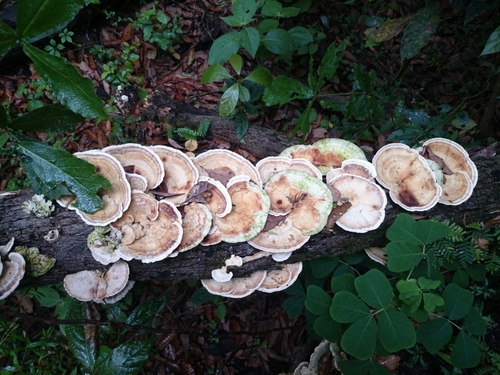
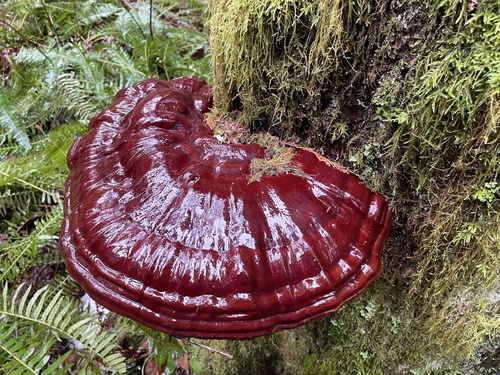
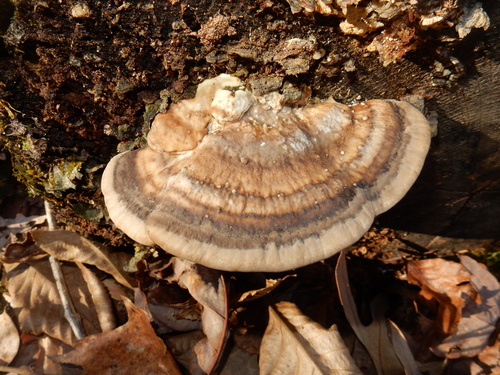
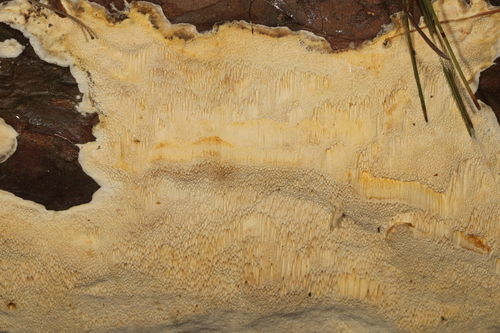
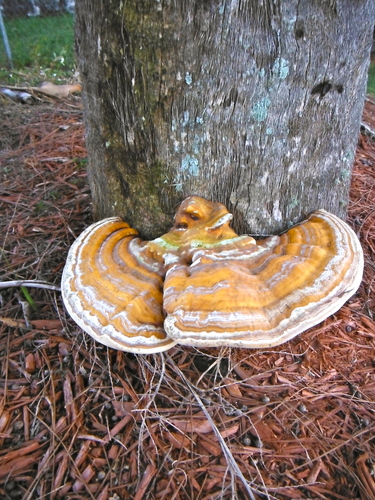
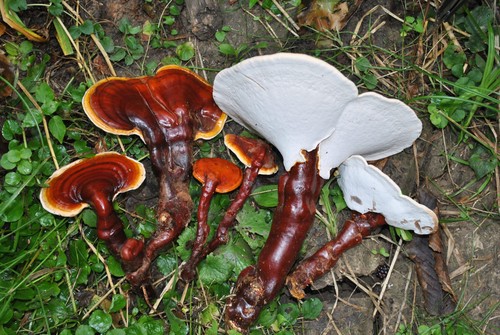
This is a species description for Ganoderma lucidum (Curtis) P.Karst. Its caps can grow up to 35 centimeters (14 inches) across. The fruiting body almost always has a stipe, which ranges from tawny to russet in color and is 1.5 times the diameter of the cap. The context tissue, the sterile tissue inside the fruiting body between the pileus crust and the start of the tubes, is pink-buff to cinnamon-buff in color, has a corky texture, shows concentric growth zones, and contains no resinous or melanoid deposits. The hymenium has 4–5 pores per millimeter. Chlamydospores are absent in this species. Basidiospores measure 8.2–12.1 μm long (10.7 μm on average) and 4.8–8.9 μm wide (7.1 μm on average), with a spore shape index of 66.2. This species is widely distributed in tropical and subtropical rainforest regions across Asia, Africa, and the United States. It grows on decaying hardwood trees. Wild populations found in the U.S. states of California and Utah were likely introduced by human activity and have become naturalized. In southern Vietnam, it can be found growing on dầu lim trees on Phú Quốc. G. lucidum has the longest history of use in China, Vietnam, and India. Today it is grown through intensive cultivation in Japan, Korea, and China, and cultivation is beginning to spread to some countries in Southeast Asia and South America. A 2020 study identified methods to cultivate G. lucidum using various side-stream materials and waste products. Normally, this species does not produce fruiting bodies as well when grown on softwoods like aspen, likely because softwoods contain compounds toxic to many fungi including Ganoderma species. However, recent research has found that G. lucidum can still degrade wood from Pinus sylvestris, causing wood delignification while keeping carbohydrate proportions high. This finding opens new opportunities to use softwoods for G. lucidum cultivation. G. lucidum is inedible and becomes rock-hard when dried, but it is used to make a bitter-tasting tea. Some cultures claim this tea has health effects, but there is no conclusive scientific evidence to support these claims. The species carries safety concerns and has moderate interactions with certain medications and dietary supplements. Due to low-quality clinical research, there is no reliable evidence that G. lucidum is effective for treating cardiovascular disease in people with type 2 diabetes, or any other medical condition.