About Ganoderma australe (Fr.) Pat.
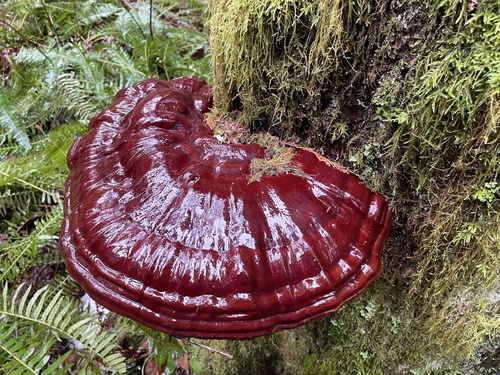
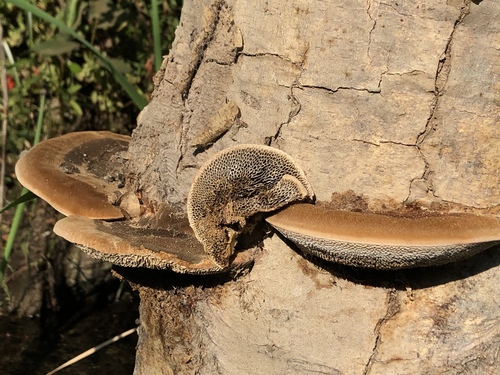
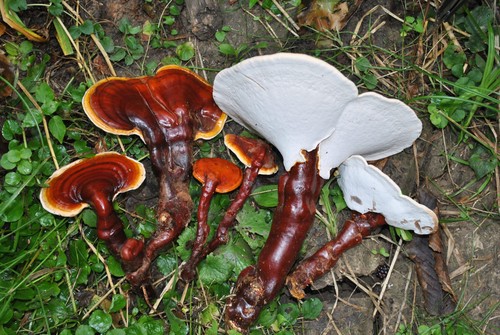
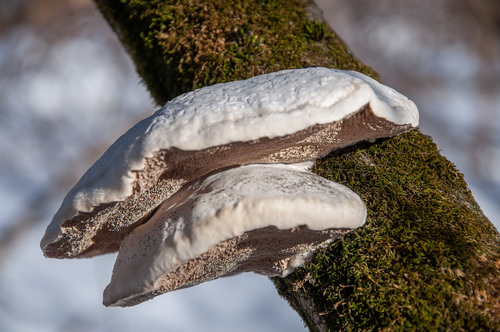
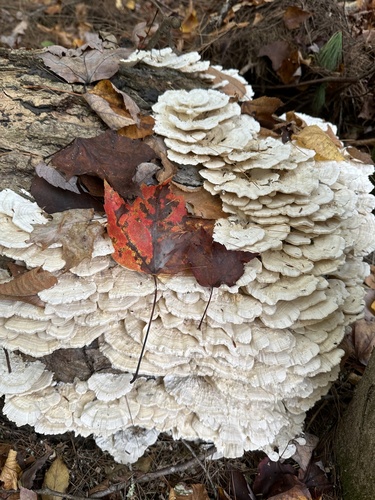
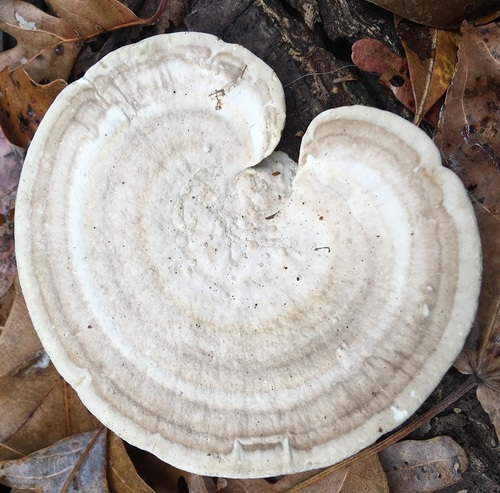
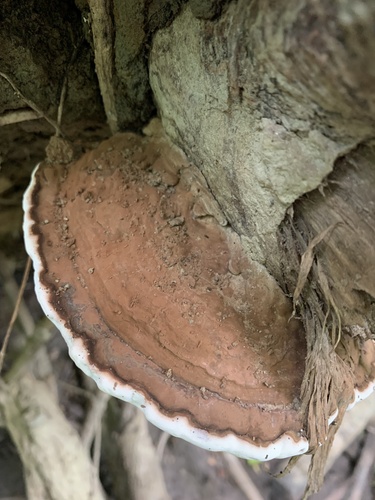
Like other polypores, Ganoderma australe has a rigid, tough texture and a shelf-like appearance. Most G. australe specimens have a dark brown upper surface, though specimens found in northwest India and Pakistan have a lighter appearance. G. australe also has thin, shiny horn-like layers that distinguish it from G. applanatum. It does not produce the long, thin stipe seen on G. cochlear. Physiologically, its primary mode of transmission is likely through air-borne spores, as no rhizomorphs have been found for this species. Increasing temperatures reduce the size of its spores; in one measured sample, spore size ranged from 7.5–9.5 by 5–7 micrometers. Compared to other Ganoderma species, G. australe has a wide variety of host plants, and it is known to parasitize oil palms in addition to other hosts. G. australe is widely distributed across the tropics, and appears to be one of the most common Ganoderma species found there. Confirmed locations where it occurs include areas south of the Sahara desert, the Pacific Ocean shores of Canada, northwest India and Pakistan, and the region stretching from the Philippines to New Caledonia and Papua. It is not confirmed whether this species occurs in South America, as very few available specimens have been collected there.