About Galerella sanguinea (Rüppell, 1835)
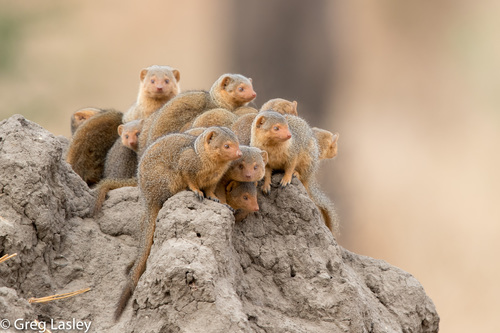
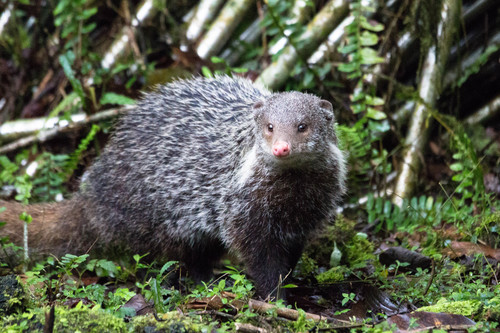
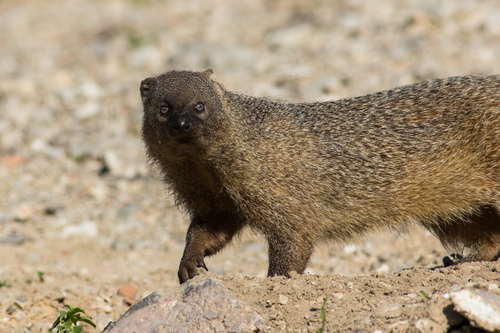
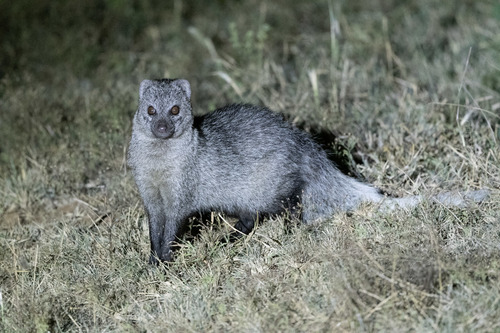
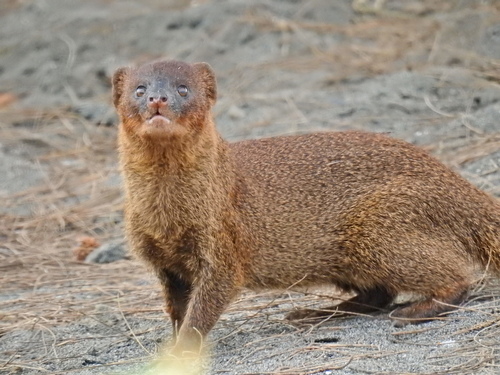
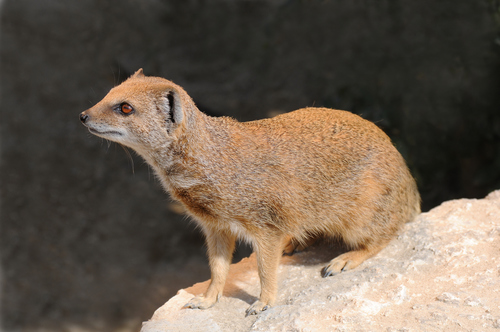
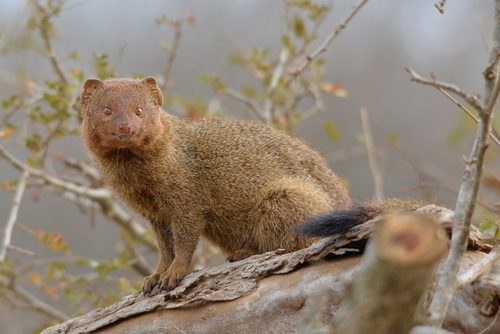
This species, scientifically named Galerella sanguinea (Rüppell, 1835), is commonly known as the common slender mongoose. As its common name suggests, it has a lithe body that measures 27.5 to 40 cm (10.8 to 15.7 in) long, with a long tail of 23 to 33 cm (9.1 to 13.0 in). Males weigh 640 to 715 g (22.6 to 25.2 oz), while smaller females weigh 460 to 575 g (16.2 to 20.3 oz). All these measurements align with the average measurements published by Rood and Wozencraft. Fur color varies widely between subspecies, ranging from dark reddish-brown to orange red, grey, or even golden yellow. This mongoose can be distinguished from other mongooses by the prominent black or red tip on its tail. It also has silkier fur than other African members of its family. The common slender mongoose is found across sub-Saharan Africa. It is most common in savannah and semiarid plains, and is rarely recorded in densely forested areas and deserts. The common slender mongoose is often described as solitary. However, studies of this species in the Kalahari, South Africa found that individuals form spatial groups made up of one to three males and up to four females, and den together for up to one third of all nights. It is primarily diurnal, though it is sometimes active during warm, moonlit nights. It does not appear to be territorial, but it maintains stable home ranges that are often shared with members of related mongoose species. The common slender mongoose may even den together with these related species, since most of these relatives are nocturnal. Dens are located in any sheltered spot that provides protection from the elements, including crevices between rocks and hollow logs. For reproduction, a male’s home range overlaps with the ranges of multiple females, and scent signals let the male know when a female is in heat. The gestation period is thought to be 60 to 70 days, and most pregnancies produce one to three young. Males do not assist in caring for the offspring. Unusually for a generally solitary species, males in the Kalahari Desert are philopatric, while females disperse to new ranges.