All Species Plantae

Gaillardia suavis (A.Gray & Engelm.) Britton & Rusby is a plant in the Asteraceae family, order Asterales, kingdom Plantae. Not known to be toxic.

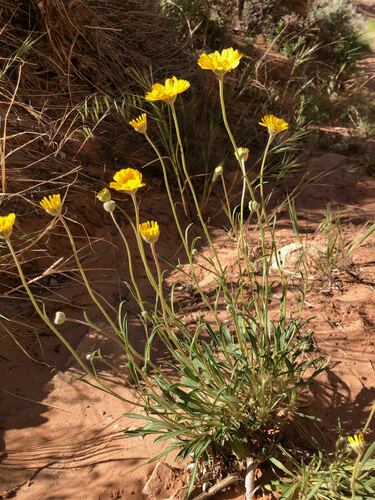
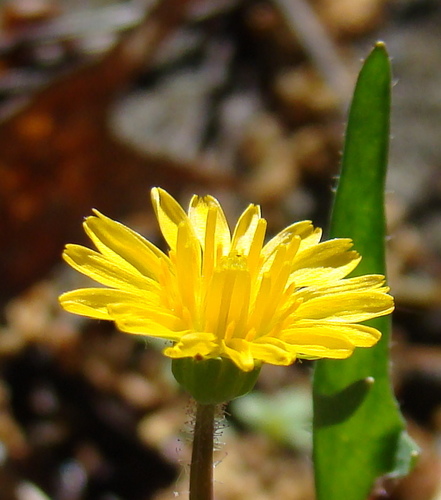
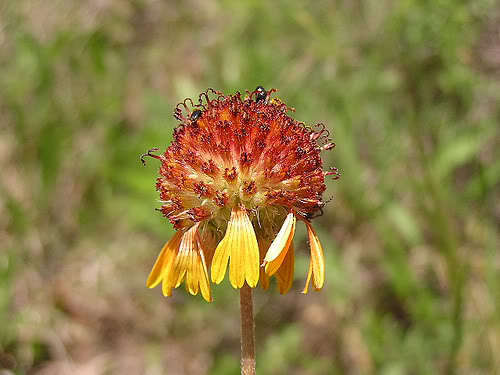
Photo of Gaillardia suavis (A.Gray & Engelm.) Britton & Rusby (Gaillardia suavis (A.Gray & Engelm.) Britton & Rusby)
Plantae

Gaillardia suavis (A.Gray & Engelm.) Britton & Rusby

Gaillardia suavis (A.Gray & Engelm.) Britton & Rusby

Gaillardia suavis is a perennial flowering herb in the Asteraceae family, native to northern Mexico and the southern US Great Plains.

Identify with AI — Offline
Family
Genus
Gaillardia
Order
Asterales
Class
Magnoliopsida
⚠️ Toxicity Note

Insufficient toxicity evidence; avoid direct contact and ingestion.

About Gaillardia suavis (A.Gray & Engelm.) Britton & Rusby

Nomenclature

Gaillardia suavis (A.Gray & Engelm.) Britton & Rusby is a species of flowering plant in the Asteraceae family, with the common names pincushion daisy and perfumeballs.

Native Range

This species is native to northern Mexico, specifically the states of Coahuila, Nuevo León, and Tamaulipas, as well as the southern Great Plains region of the United States, which includes Kansas, Oklahoma, and Texas.

Habitat and Soil

It grows in limestone or sandy soils found in prairies, desert scrub, or open juniper woodlands.

Growth Form and Size

It is a perennial herb that reaches up to 80 cm (31 in) in height.

Leaf Arrangement

Its leaves are crowded around the base of the plant, rather than growing along the stem.

Flower Head Stalk

Each individual flower head sits on its own separate stalk, which can grow up to 75 cm (30 in) long.

Ray Flower Characteristics

Most flower heads produce 7 to 10 red or purple ray flowers, though some heads do not produce any ray flowers at all.

Disc Flower Characteristics

The center of each flower head holds 40 to 100 pink or purple disc flowers.
Photo: (c) Jeff Quayle, all rights reserved

Taxonomy

Plantae Tracheophyta Magnoliopsida Asterales Asteraceae Gaillardia

More from Asteraceae

Sources: GBIF, iNaturalist, Wikipedia, NCBI Taxonomy · Disclaimer

Start Exploring Nature Today

Download iNature for free. 10 identifications on us. No account needed. No credit card required.

App Store
Scan to download from App Store

Scan with iPhone camera

Google Play
Scan to download from Google Play

Scan with Android camera