About Gahnia trifida Labill.
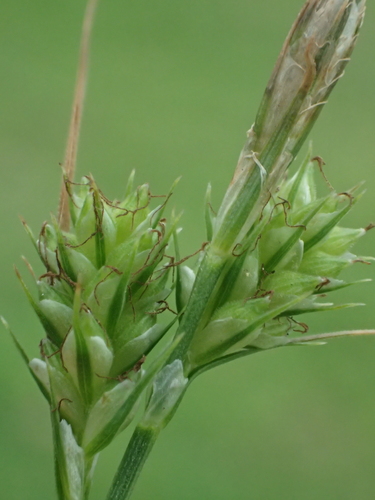
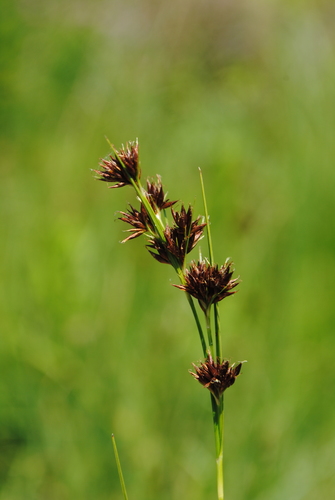
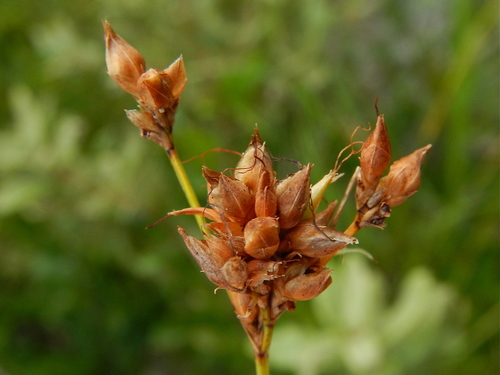
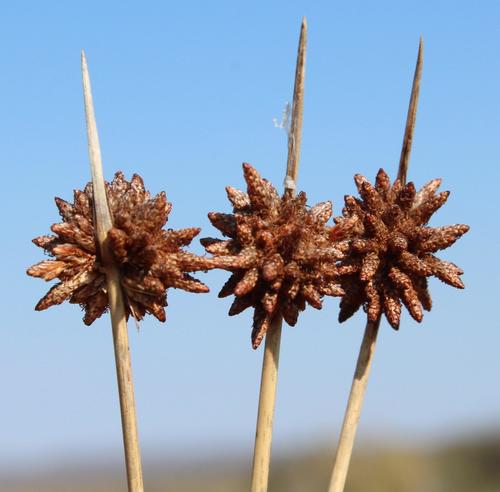
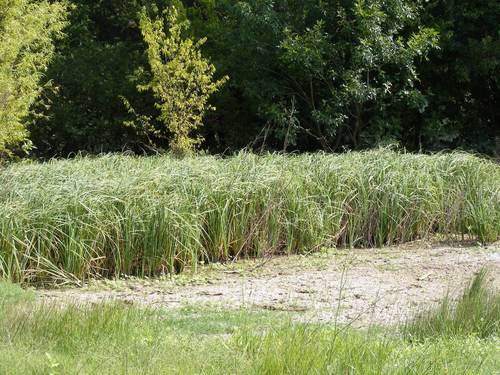
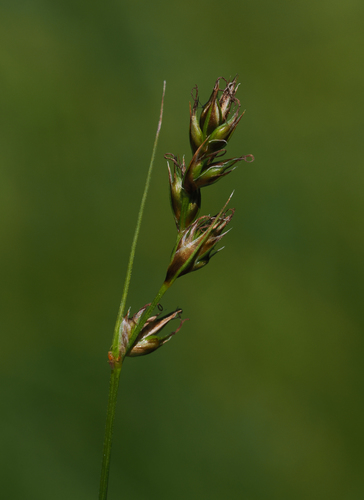
Gahnia trifida, commonly known as the coastal saw-sedge, is a tussock-forming perennial herb in the Cyperaceae family that is endemic to southern Australia. It has a grass-like or sedge-like growth form, with very rough leaf margins and leaf undersides. This species grows in dense tussocks that reach 1.5 metres in height and 1 metre across, bearing drooping leaves over 1 metre long. Its leaf blades are inrolled from the margin along the upper surface. Stems are rigid and erect. Branchlets holding the flowering heads emerge from axils at the main bracts, and each branchlet holds a spike-like arrangement of numerous yellow or brown flower clusters. Gahnia trifida grows on white or grey sand, or clay, that may be saline. It occurs in coastal region wetlands across Southwest Australia, South Australia, Victoria, and Tasmania. It is also found on Rottnest Island, where it grows near inland salt lakes. Its habitat is moist, often located adjacent to creeks and swamps, and may also be saline. This species was first described by Jacques Labillardière in 1805 in his work Novae Hollandiae Plantarum Specimen.