About Funambulus palmarum (Linnaeus, 1766)
Size and Body Proportion
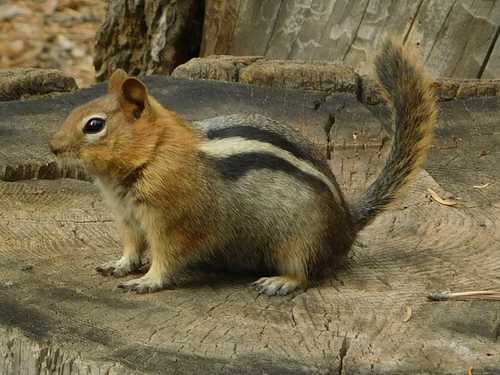
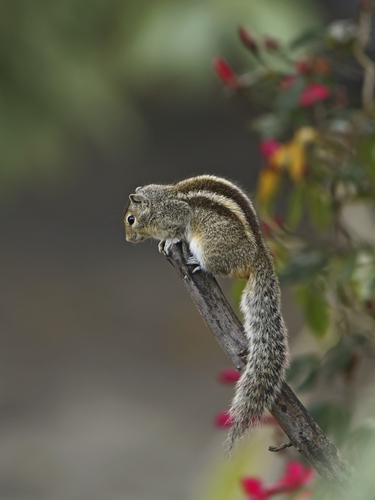
The palm squirrel, Funambulus palmarum, is about the size of a large chipmunk, with a bushy tail that is slightly shorter than its body.
Dorsal Coloration and Markings
Its back is grizzled grey-brown, marked with three distinct white stripes that run from head to tail; the two outer stripes only extend from the forelegs to the hind legs.
Ventral and Tail Coloration
It has a creamy-white belly, and a tail covered with interspersed long black and white hairs.
Ear Morphology
Its ears are small and triangular.
Juvenile Coloration
Juvenile squirrels have noticeably lighter coloration that darkens progressively as they age.
Albinism Occurrence
Albinism is rare, but has been recorded in this species.
Reproductive Patterns
The Indian palm squirrel displays a range of reproductive behaviors: some individuals have cyclical reproductive activity, while others reproduce continuously.
Gestation and Breeding Period
The species has a gestation period of 34 days, and breeding occurs in grass nests during autumn.
Litter Size
Litters most commonly contain two or three young, with an average litter size of 2.75.
Development Stages
The young are weaned after around 10 weeks, and reach sexual maturity at 9 months.
Adult Weight
Adult individuals weigh 100 grams.
Longevity
Little is known about the longevity of wild individuals, but one captive specimen lived for 5.5 years.