About Fulica cornuta Bonaparte, 1853
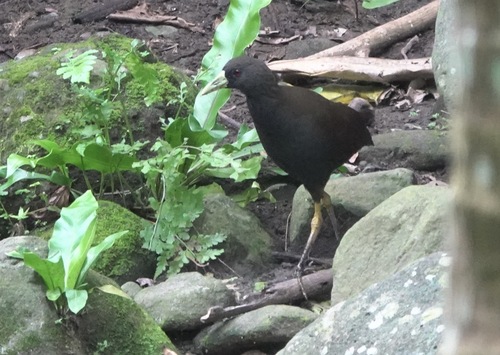
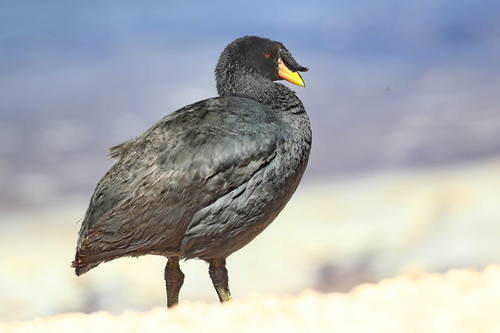
The horned coot, with the scientific name Fulica cornuta Bonaparte, 1853, has males that average a little larger than females. This species reaches a total length of 46–62 cm (18–24 in) and has a reported body mass ranging from 1.6–2.29 kg (3.5–5.0 lb). It averages slightly smaller than the related giant coot, and is the second largest coot and the third largest extant rail species. While most coots have a horny shield on the forehead, the horned coot has three wattles in both sexes. The central wattle is large and may possibly be erectile. All three wattles end in tufts of filoplumes. At the base of the beak, below the wattle, there is a whitish fleshy caruncle. The bill is olive yellow, and brightens to dull orange closer to its base. Unlike the giant coot, the legs of the horned coot are dull greenish. The horned coot occurs in the altiplano of north-western Argentina, south-western Bolivia, and north-eastern Chile. It is almost entirely restricted to lakes located at altitudes of 3000–5200 m above sea level, but has occasionally been recorded at lower altitudes.