About Frithia pulchra N.E.Br.
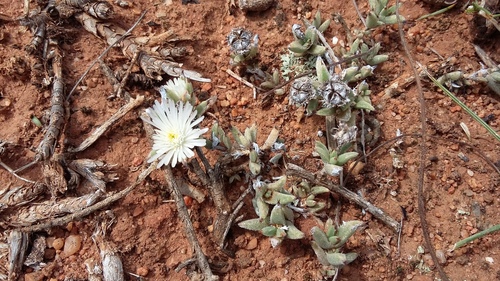
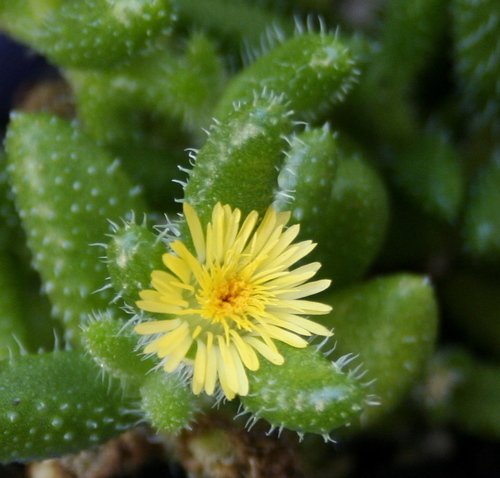
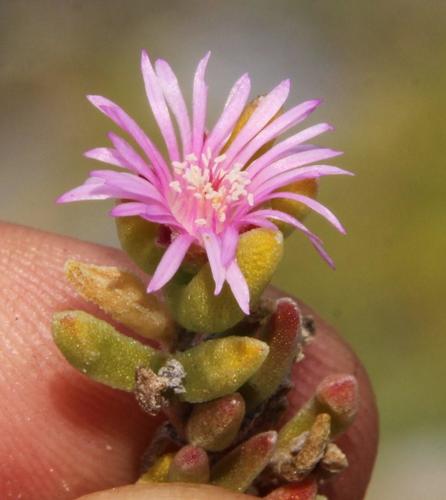
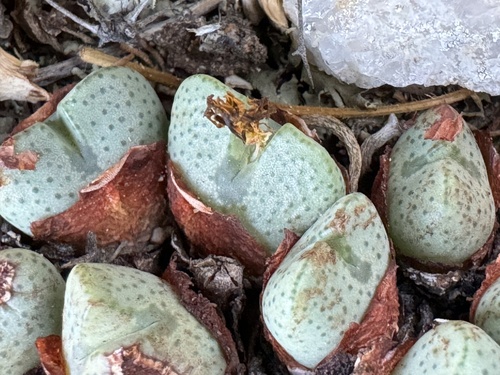
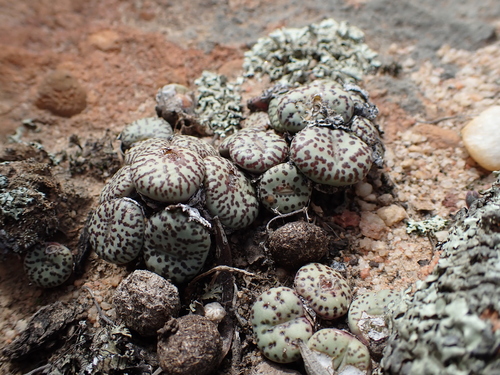
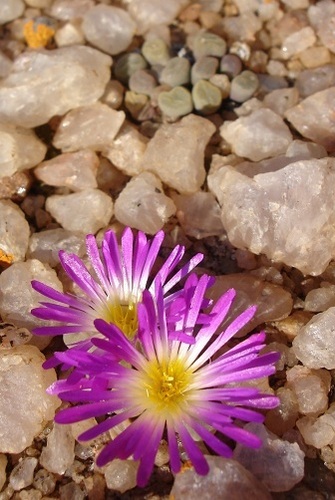
Frithia pulchra, commonly known as fairy elephant's feet, is a species of flowering plant in the fig‑marigold family Aizoaceae. It is endemic to Gauteng Province, South Africa, where the IUCN Red List classifies it as Vulnerable. Its native natural habitat is temperate grassland that receives high rainfall in summer. This is a tiny, stemless succulent that only reaches 10 cm (3.9 in) in height and 20 cm (7.9 in) in width. It has bulbous oblong leaves with leaf windows at the leaf tips, and produces daisy-like magenta and white flowers in summer. During periods of drought, it can shrink to sit beneath the soil surface, which protects it from excessive drying out, but also makes the plant extremely hard to locate. It is named in honor of Frank Frith, a Johannesburg gardener who showed specimens of the plant to botanist N.E. Brown of Kew Gardens during Frith's 1925 visit to London, UK. The Latin specific epithet pulchra translates to "beautiful". This plant cannot survive frosts, so it must be cultivated under glass in temperate regions. In the United Kingdom, it has been awarded the Royal Horticultural Society's Award of Garden Merit.