About Frigga crocuta (Taczanowski, 1878)
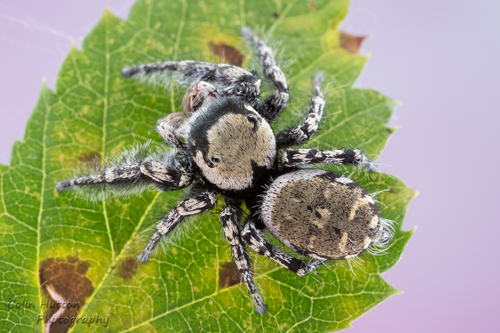
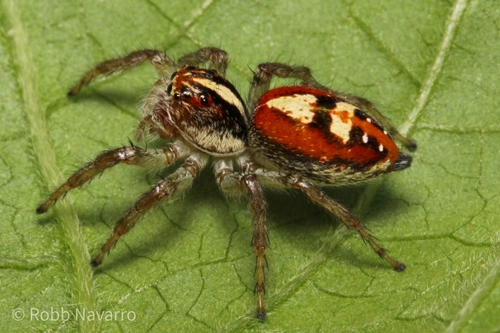
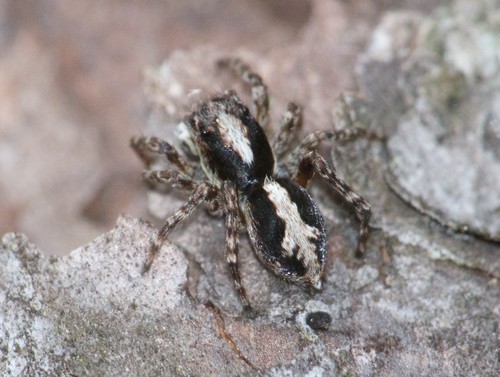
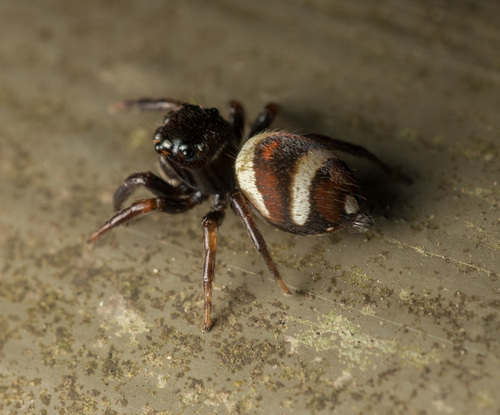
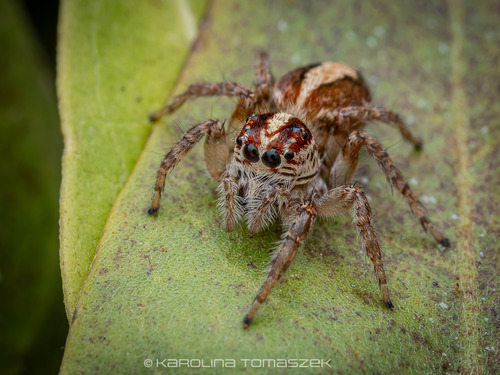
Frigga crocuta was first formally described by Taczanowski in 1879, and his original description includes detailed morphological features for both male and female individuals. Males reach a total body length of 8.5 mm, and females grow to 10 mm total length. The cephalothorax of this species is robust and elevated, with the thorax section having strongly rounded sides. The head section is approximately as long as it is wide, is only slightly separated from the thorax, has a sharply sloped back surface, and an elevated clypeus. The eyes are arranged in a regular pattern; the diameter of the anterior lateral eyes is almost three times smaller than the diameter of the median eyes. The abdomen is fusiform, swollen near its base, and is somewhat longer and much narrower than the cephalothorax. The mandibles are vertical, very strong, and have a prominent knot on their outer edge halfway along their length. Coloration in this species is variable but follows a consistent general pattern. The front portion of the cephalothorax, extending up to half the length of the thorax, is bright reddish-brown, while the posterior portion is darker brown. All of the species' eyes sit on a black spot. The area between the eyes is covered in light yellowish down, which becomes reddish toward the front of the head. Abdominal coloration varies significantly between individuals, but most have a pale yellowish base color marked with various brown patterns and markings. Frigga crocuta is native to South America, where it has been documented in Colombia, Peru, Ecuador, and the Galápagos Islands. This species has been introduced to a number of other regions outside its native range, including Britain, Queensland (Australia), and multiple Pacific Islands.