About Frieseomelitta nigra (Cresson, 1879)
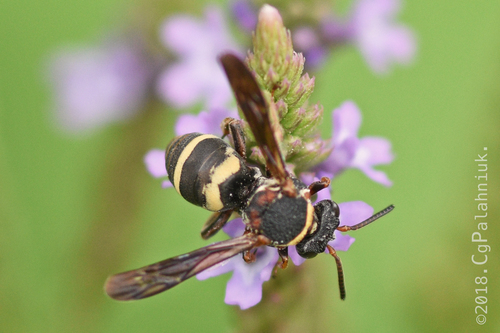
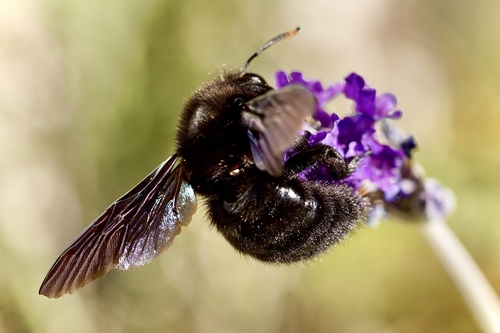
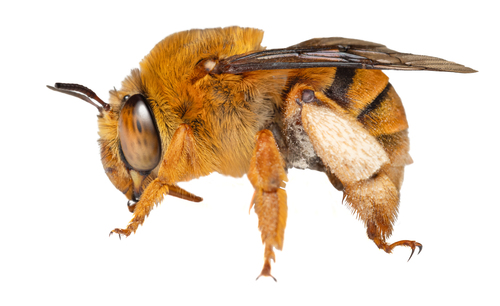
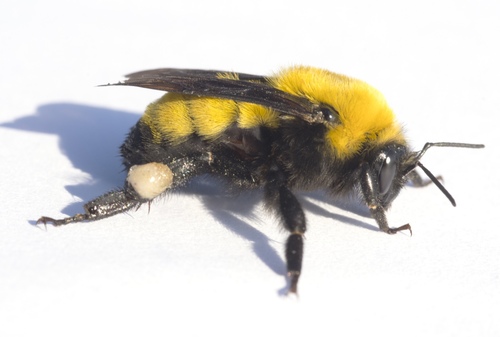
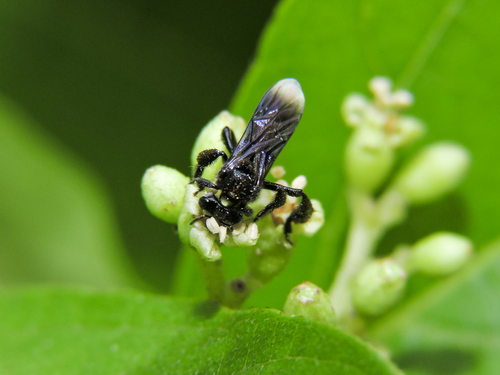
Like other bees in the Meliponini tribe and other members of the Frieseomelitta genus, Frieseomelitta nigra (commonly called the buzzard bee) does not have a stinger. Adults of this species are roughly 6 mm long, with an entirely black body and dark wings that have white tips. The species shares many traits with Frieseomelitta paupera; in regions including Colombia and Trinidad and Tobago, F. paupera is even classified as a subspecies of F. nigra. This bee is distributed across 16 Mexican states: Sinaloa, Nayarit, Jalisco, Colima, Michoacán, State of Mexico, Morelos, Guerrero, Oaxaca, Veracruz, Chiapas, Tabasco, Campeche, Yucatán and Quintana Roo. It is also found in Belize, and observational records suggest it may also occur in Guatemala. It generally favors warmer climates, and inhabits a range of ecosystem types: humid forest, dry forest, scrubland, temperate forest, cloud forest, and wetlands. It typically constructs nests in holes found in trees, lampposts, or walls, as well as in different types of substrates on the ground, and usually covers these nests with resin. This species acts as a pollinator for a variety of plants. Agriculturally important species pollinated by the buzzard bee include nanche, lemon, coconut, and melon. Other plants it often pollinates include milk mulberry, members of the Asteraceae family, jujubes, and logwood. Buzzard bees are commonly kept for meliponiculture, the practice of stingless beekeeping. Honey produced by F. nigra has recorded soluble protein concentrations between 577 and 607 mg per 100 g, and gallic acid concentrations between 162 and 168 mg per 100 g. This honey has an 85% chelation capacity for copper ions, 47% for iron ions, and 94% for copper EDTA. It also has a high scavenging capacity for OH radicals, which are linked to oxidative stress and associated human health conditions including heart and lung disease, cancer, Alzheimer's disease, and other neurodegenerative diseases.