About Frangula betulifolia (Greene) Grubov
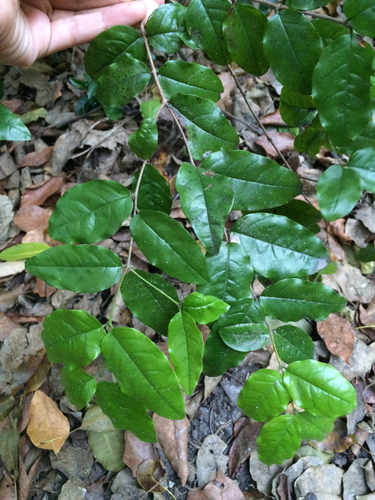
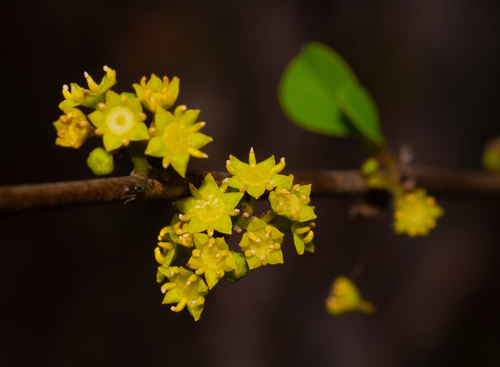
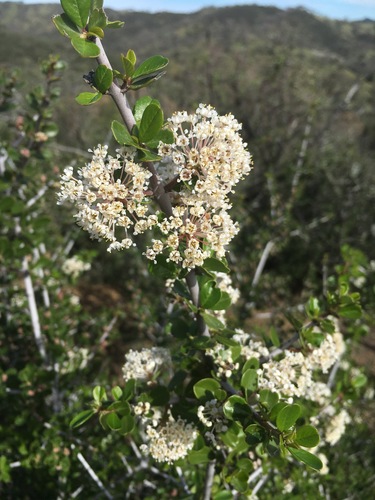
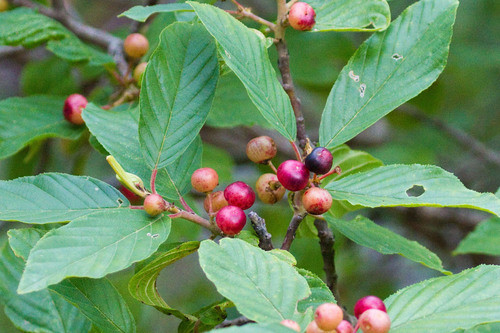
Frangula betulifolia, commonly called birchleaf buckthorn, is a shrub or small tree in the buckthorn plant family Rhamnaceae. This species is native to the northern Sierra Madre Occidental cordillera of northern Mexico, and the mountainous, desert regions of the Southwestern United States: Arizona, Utah, New Mexico, and far west Texas. Besides growing across Sonora, Chihuahua, and Durango along the Occidental cordillera, a large distinct population of the species is found further east in Nuevo León. The former variety obovata, which had rounder leaves and grew from southern Nevada through northern Arizona and southern Utah to southwestern Colorado, is now classified as the separate species Frangula obovata. Birchleaf buckthorn has large, ovate leaves, and grows to between 3 and 10 meters tall when mature, reaching small tree size. It blooms in spring from May to June, and produces black-purple fruits in fall. The core range of birchleaf buckthorn is the northern Sierra Madre Occidental cordillera, from central Durango north to west-southwest Chihuahua, and eastern Sonora. It also occurs just north of this range at the Arizona-New Mexico and Sonora-Chihuahua borders, an area of sky island mountain ranges known as the Madrean Sky Islands. Other moderately sized populations are found in central and southwest New Mexico, an eastward extension from the Mogollon Rim–White Mountains of the Arizona transition zone; the Grand Canyon of the Colorado River, with the range extending upriver into the Canyon Lands of southeast Utah; western Texas; and southern Nuevo León. Smaller, minor populations are also found in Nevada, Coahuila, and Tamaulipas. Native Americans traditionally chewed the inner bark of this species for medicinal purposes. Various songbirds and small mammals eat its berries; the berries are edible but not palatable to humans, and deer and bighorn sheep browse the plant’s foliage.