About Fragaria virginiana Duchesne
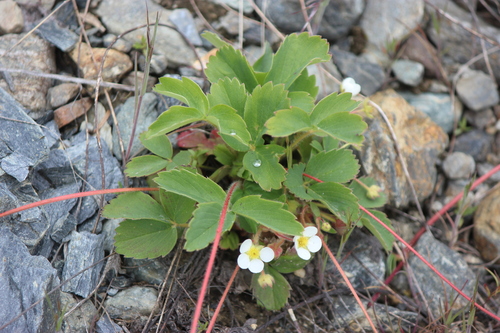
Fragaria virginiana Duchesne can grow up to 10 centimetres (4 inches) tall. The plant typically produces numerous trifoliate leaves that are green on the upper surface and pale green on the lower surface. Each leaflet is about 10 cm (4 in) long and 4 cm (1.6 in) wide. Leaflets are oval shaped and have coarse teeth along their edges, except near the base of the leaflet. This species produces five-petaled white flowers with numerous pistils, surrounded by stamens that bear yellow anthers. Ten small green sepals sit under the flower petals. The seeds of this plant develop from the pistils in the center of the flower, which become dark-colored achenes (botanical fruits) embedded on the surface of the strawberry. The fruit of this wild strawberry is smaller than the fruit of the garden strawberry (Fragaria × ananassa). Botanically, the fruit is classified as an aggregate accessory fruit, though it is commonly called a berry. Fragaria virginiana reproduces both sexually by seed and asexually by runners (stolons). It grows best in moderate to cool climates, and thrives in full sun or partial shade. It prefers nutrient-dense, well-drained soils, ideally sandy loam. This wild strawberry is native to North America, and occurs in all US states and the southern provinces of Canada.
Fragaria virginiana populations are gynodioecious, meaning they contain both bisexual (hermaphrodite) and female plants, allowing for a range of reproductive strategies. Asexual reproduction via stolons leads to creeping spread of the population. This results in clumped plant distributions, with new individuals rooting close to the parent plant. Sexual reproduction requires pollinators to carry pollen from the anthers of one plant to the stigma of another. Pollinators, most often bees, flies and ants, have been observed to prefer visiting hermaphrodite flowers over female flowers. After fertilization and fruit development, Fragaria virginiana relies on herbivores for seed dispersal. Mammals including bears, mice, elk, and raccoons feed on the wild strawberry fruits and carry seeds long distances. When these herbivores eat the fruit, travel to a new location, and defecate the passed seeds, the seeds are deposited in a new site surrounded by nutrient-rich feces. Having both sexual and asexual reproduction methods brings both benefits and drawbacks for Fragaria virginiana, particularly when comparing their different dispersion patterns.
Fragaria virginiana has a variety of uses: erosion control for weak soils, ground coverage, medicinal treatments, and culinary purposes.