About Fragaria cascadensis K.E.Hummer
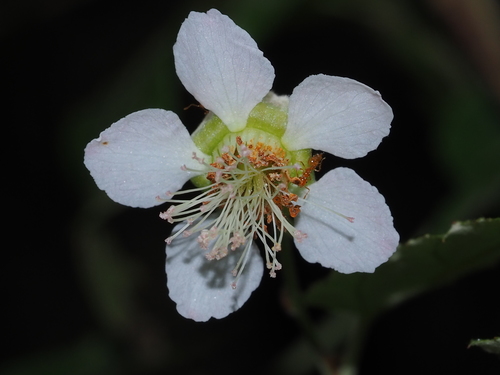
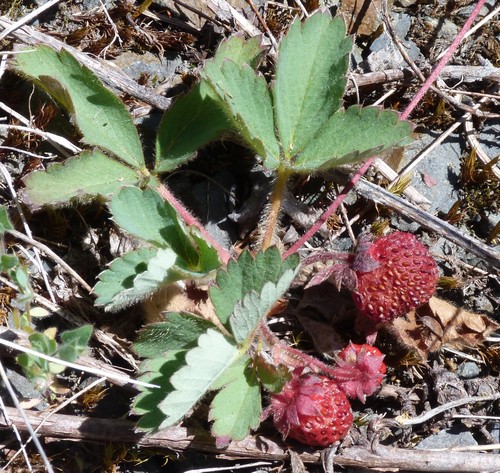
Fragaria cascadensis K.E.Hummer is a perennial strawberry species, bearing the characteristic white flowers of the Fragaria genus. It can be distinguished from other strawberry species by having hairs on the upper surface of its leaves (rather than hairs only on the underside or no hairs at all), and by its distinct middle leaflet. This species starts growing after snow melt, which occurs in May or early June in its native region. Flowers emerge around early July, and fruits ripen over an approximately two-week period during August. The fruits are around 1 cm wide, with soft flesh and a white interior. Fragaria cascadensis is a decaploid. This species grows along the western slopes of the Oregon Cascade Mountains, ranging from the Columbia River south to Crater Lake. It occurs at elevations from approximately 3,000 feet up to the tree line, growing in volcanic-origin sandy-clay loam soil in forest clearings and open alpine meadows. This species is not yet in cultivation. While it is a decaploid, unlike the octoploid common strawberry, it can be hybridized with Fragaria iturupensis and Fragaria × vescana. Crossing with Fragaria × Comarum hybrids or Fragaria × bringhurstii is expected to produce fertile offspring when chromosome doubling occurs, which may reveal new flavors or genetic disease resistance.