About Formica rufibarbis Fabricius, 1793
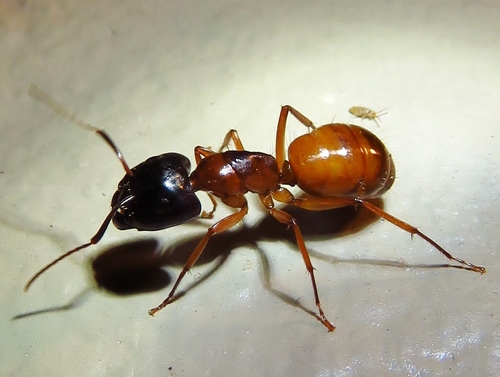
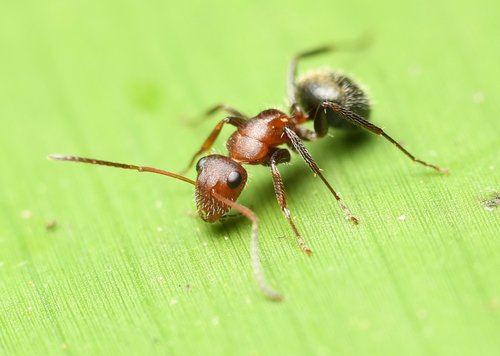
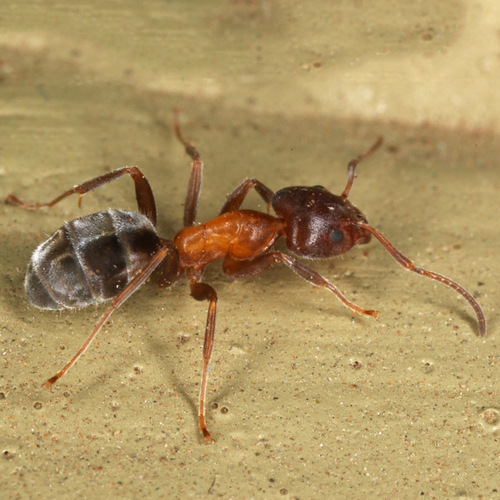
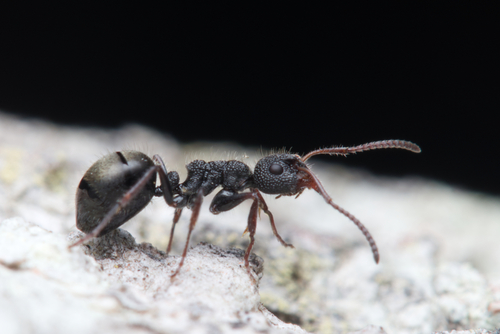
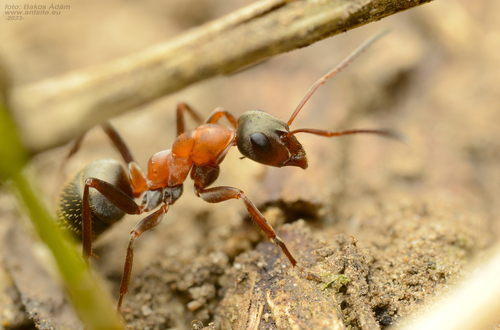
The Red-barbed Ant, Formica rufibarbis Fabricius, 1793, is readily identified by its relatively large size and distinctive coloration: a blackish head, contrasting with a light reddish thorax. Small dark workers do occur and may be mistaken for Formica fusca, although there is always a clear difference in coloration between the thorax and abdomen. Workers can also be confused with Formica cunicularia, which lacks hairs on the thorax. It is locally common throughout continental Europe, ranging from Portugal to Western Siberia. It nests in short lowland grass, heather, or maritime heath that overlies loose or sandy soils. Colonies usually contain one to three queens, although gynaecoid (egg-laying) workers have also been recorded. Queens found new colonies in the same manner as other ants from the Formica fusca group. Eggs are first laid early in the new year, and mature colonies reach a maximum size of around 500 workers. Winged reproductive alates emerge from colonies in late June to early July.