About Formica incerta Buren
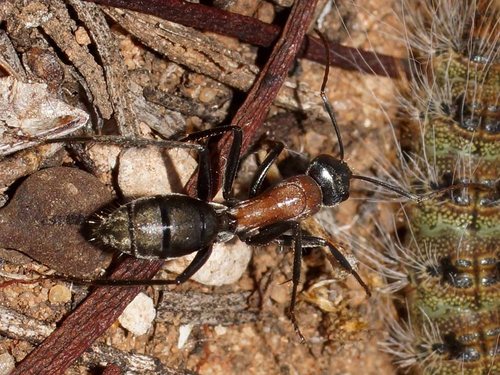
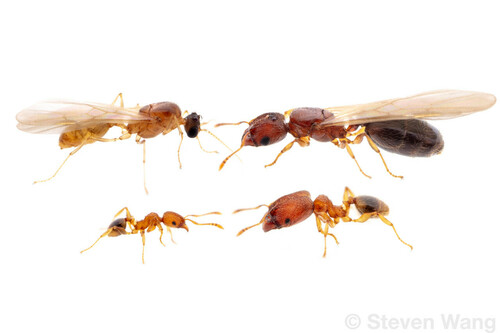
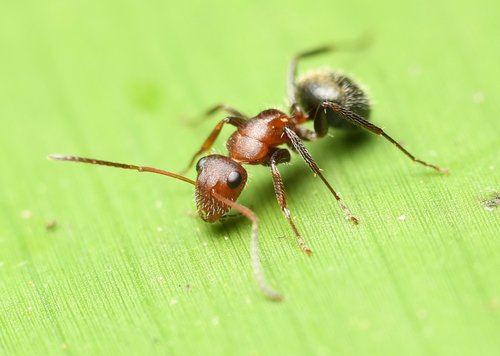
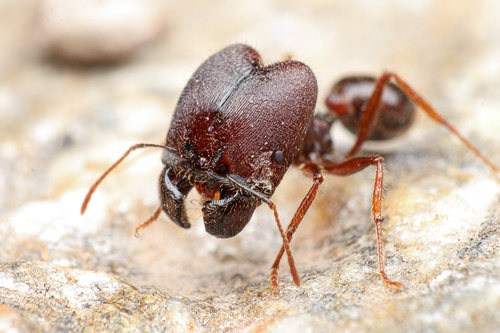
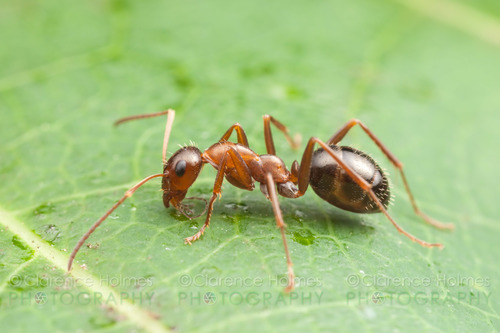
Description: Worker Formica incerta are very similar in appearance to Formica pallidefulva, but F. incerta has a few chaetae on the mesosoma and around the petiole, while F. pallidefulva does not. F. incerta is a slightly paler color and less glossy than F. pallidefulva, but there is considerable variation between individual specimens and between different colonies. F. incerta queens are larger than workers of this species, and can be distinguished from queens of other Formica species by three dark spots on their thorax.
Distribution and habitat: Formica incerta is native to the eastern half of the United States. Its range extends southwards from Minnesota, Nebraska, New England, and the Appalachian balds to Colorado, and possibly extends to New Mexico. This ant species lives in sandy and clayey soils. It favors old grassland, meadows, and heathland, but can also be found in sparse woodlands, forest rides, prairies, parks, lawns, and roadside verges. In many areas, it is the most abundant Formica ant species, and is the first to recolonize restored grassland.