About Flindersia xanthoxyla (A.Cunn. ex Hook.) Domin
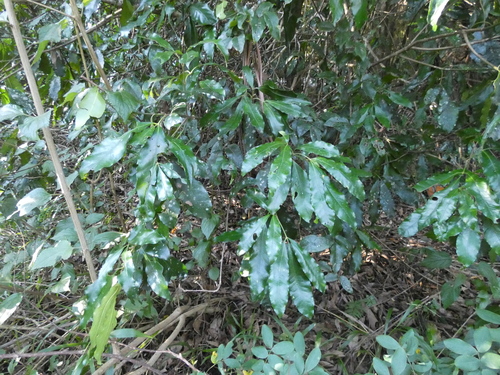
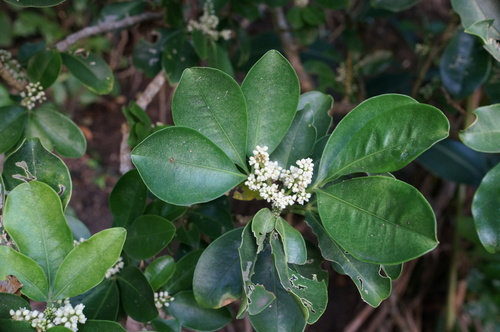
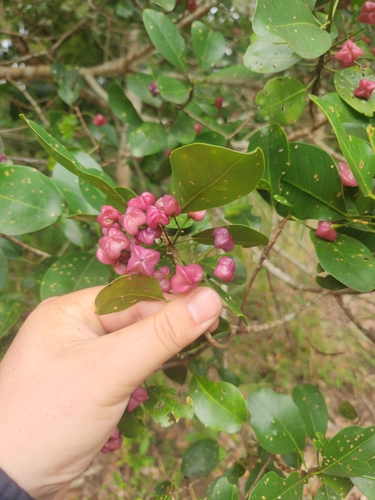
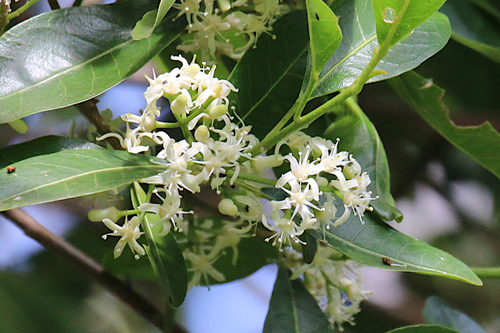
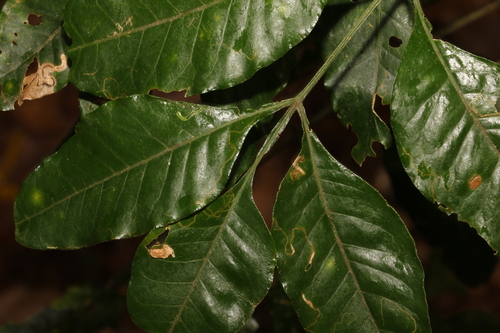
Flindersia xanthoxyla is a tree that typically reaches a height of 40–45 m (131–148 ft), with a trunk diameter of up to 90 cm (35 in). Its trunk is straight and cylindrical, covered in grey or brownish-grey bark that has vertical fissures and sheds in small flakes. Smaller branches have distinct leaf scars, and new branch growth is covered in star-shaped hairs. This species has pinnate leaves that are 110–320 mm (4.3–12.6 in) long, arranged in opposite pairs. Each leaf holds between seven and eleven egg-shaped to elliptical leaflets; most leaflets measure 40–130 mm (1.6–5.1 in) long and 10–32 mm (0.39–1.26 in) wide. Side leaflets are either sessile or attached via a petiolule up to 6 mm (0.24 in) long, while the end leaflet grows from an 8–28 mm (0.31–1.10 in) long petiolule. The leaflets are bright green on their upper surface and paler on their lower surface. Flowers are arranged in 170–250 mm (6.7–9.8 in) long panicles that grow from leaf axils or the ends of branchlets. The sepals are around 1 mm (0.039 in) long, and the petals are yellow or pale yellow, measuring 4–4.5 mm (0.16–0.18 in) long. Flowering takes place between October and February. After flowering, it produces a woody capsule fruit that is 65–110 mm (2.6–4.3 in) long, studded with rough pointed projections up to 4 mm (0.16 in) long. When the fruit matures, it splits into five valves to release winged seeds that are 33–50 mm (1.3–2.0 in) long. Flindersia xanthoxyla grows in dry and subtropical rainforest, at altitudes between 75 and 500 m (246 and 1,640 ft). Its range extends from the Richmond River in north-eastern New South Wales to Gympie in south-eastern Queensland. It is grown as an ornamental tree, and also planted to provide shade. In the past, its timber was used to construct coaches, make cabinets, flooring, tool handles, interior lining, ammunition boxes, artificial limbs, and for general joinery work. The timber of this species has good steam bending properties.